Dave’s ‘The Boy Who Played the Harp’: A South London Story of Faith, Mental Health, the World Around Us, and Love
The Londoner returns with his 3rd album.
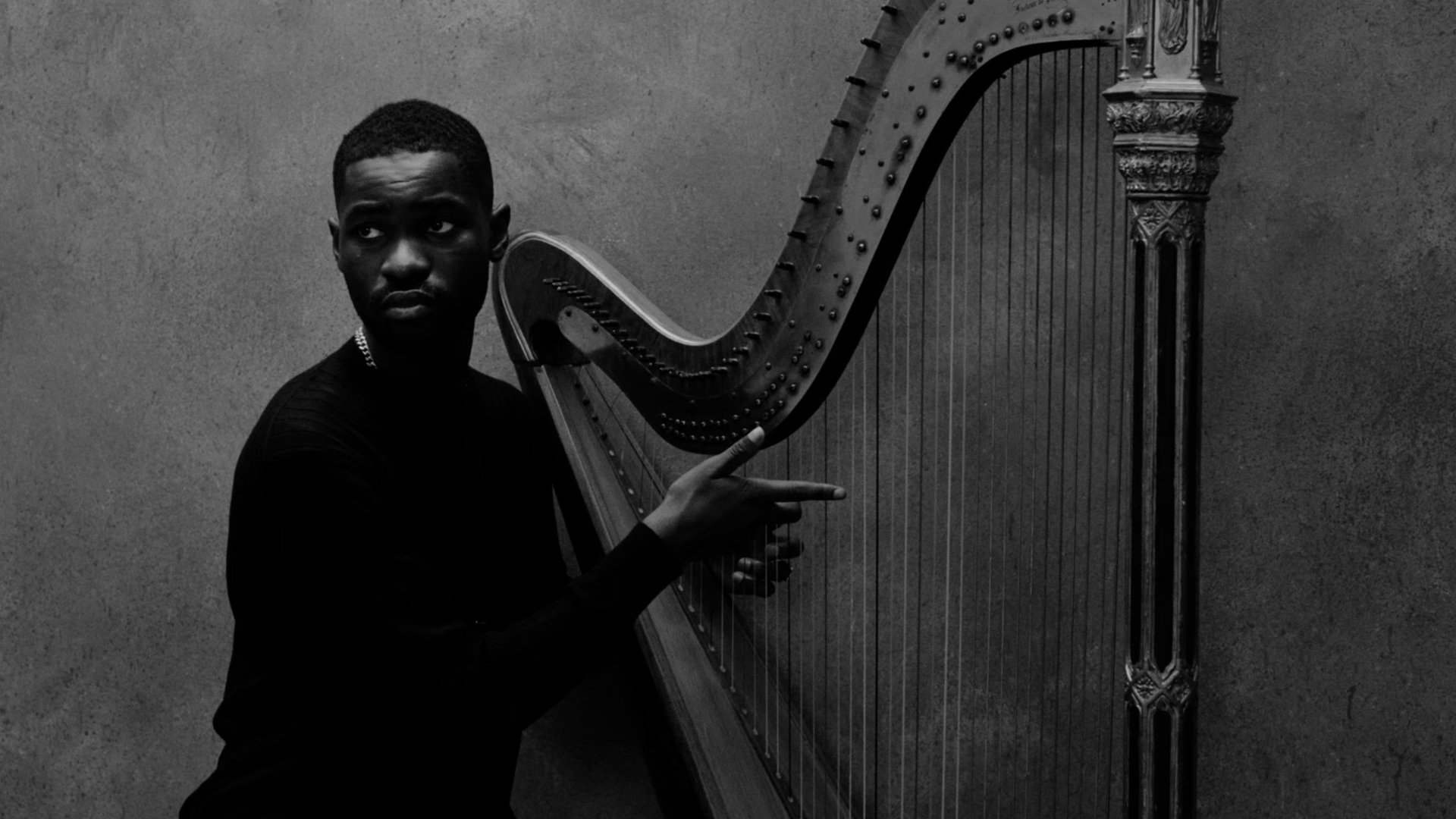
Photo: Gabriel Moses
Dave’s new album, The Boy Who Played the Harp, comes after a four-year wait from his last studio album. The South London rapper, often described as a lyrical and intelligent storyteller, has a gift for weaving together personal narratives, social commentary and intricate wordplay. The album celebrates his South London roots while exploring faith, the realities of the world, personal growth and the things he once dreamed of. It also delves into loss and yearning for love, asking whether he will ever find it.
From the opening track, you can tell Dave is about to take us on a sonic journey.
175 Months draws you in from the first word. Dave asks God for forgiveness for the drinking and the spirits that take him when he writes. He is angry with God for taking someone who was young. He feels lonely in the house he prayed for, lying to loved ones of someone close to him who has cancer. There is something painful when he says his mum probably used her last prayer on him. He worries about judgment day and prays for quick change.
He reflects on the pressure of praying for the world, especially when he is in a different position. This song captures the pressure people face, almost like OCD. “I am just praying that my purpose can justify my pain,” Dave repeats. At 26, he does not know what he is fighting for. It is an honest and heartfelt song exploring the realities of life, arguably one of the standout songs on the album.
Chapter 16 slows the pace and features legendary grime artist Kano. The piano threads beautifully through the track as Dave talks about mothers shedding tears when their children are lost to violence, whilst killers celebrate.
Kano speaks directly through a fascinating dialogue with Dave: “If it is not positive drop it, the streets residue / But keep a piece of yourself when you are selling you”. Kano reminds Dave to take photos with friends because a sip can turn into an addiction to jealous juice. He encourages Dave to grab the accolades, saying he and Little Simz are the ones who can make it.
Kano and Dave then go deeper in conversation. Kano questions his legacy and whether people will remember him for his artistry. Dave admits he does not know, questioning himself also. He confides in Kano: “Love will I ever find it”. He has brought a girl Chanel glasses, toured the world, but these achievements do not matter in the end if there is no love to show for it.
The exchange between the grime veteran and Dave, who is arguably forging his own legacy is extremely moving. Although the song starts serious, it becomes playful towards the end, finishing with Kano jokingly teasing Dave about suspecting that he is talking to a new woman. Kano kindly reminds Dave to take it one day at a time and to not overthink whether love will come.
Selfish, featuring James Blake, continues the theme of love. Dave questions whether he is the reason things do not go his way. He wonders if he is self-centred or if it would be better with him out of the way. He lives in confusion, attending therapy but doubting whether the therapist truly cares. James Blake conveys what Dave really wants: a lasting love, someone to give his life to or something to cherish. But he keeps asking: what if I am selfish?
Dave feels like he is fighting a sickness he cannot beat, questioning whether he will ever find love. He worries he is damaged, unwanted, and behind in milestones. Constant self-doubt overshadows him.
My 27th Birthday is a song of reflection. Dave cannot stay silent about what he observes. In Barbados, white people mistreat locals. The villa in Jamaica is owned by the Chinese. There is blood on the pine trees. He rails against brands complicit in oppression: It is fuck Coca-Cola and questions whether he should stop drinking Fanta. He cried about slavery, but then went to Dubai with his girl.
Dave constantly questions himself. Should he still make music? Should he release it? Music used to be spiritual, but now it feels different. He critiques commentators in music, saying most commentary is forced and unnecessary. He questions why people are counting numbers in music in order for it to be deemed good.
On the penultimate track, Fairchild, Dave recounts multiple experiences of sexual harassment and abuse faced by a woman he knew. The stories are told with sensitivity, capturing the entitlement and predatory behaviour women often face in social spaces, from unwanted advances to the threat of being followed or coerced. Through these narratives, Dave gives voice to the fear and vulnerability that so many women endure, highlighting the ongoing reality of sexual violence.
One commonality all the topics on the album share is pressure, most notably the pressure Dave felt to produce music, even questioning whether four and a half years was too long to be away. Despite having an amazing team and supporting other artists, he wonders if he is still in the game. It is a sobering reality for him, but also a reminder to the listener that art should never be something we pressure. Whether it takes one year or another four and a half, music with purpose and meaning will always remain relevant to its true audience.
The Boy Who Played the Harp is out now via Neighbourhood Recordings.