
The Orielles return reborn after four years with their gritty 4th LP ‘Only You Left’
The album follows 2022’s ‘Tableau’.
★★★★☆
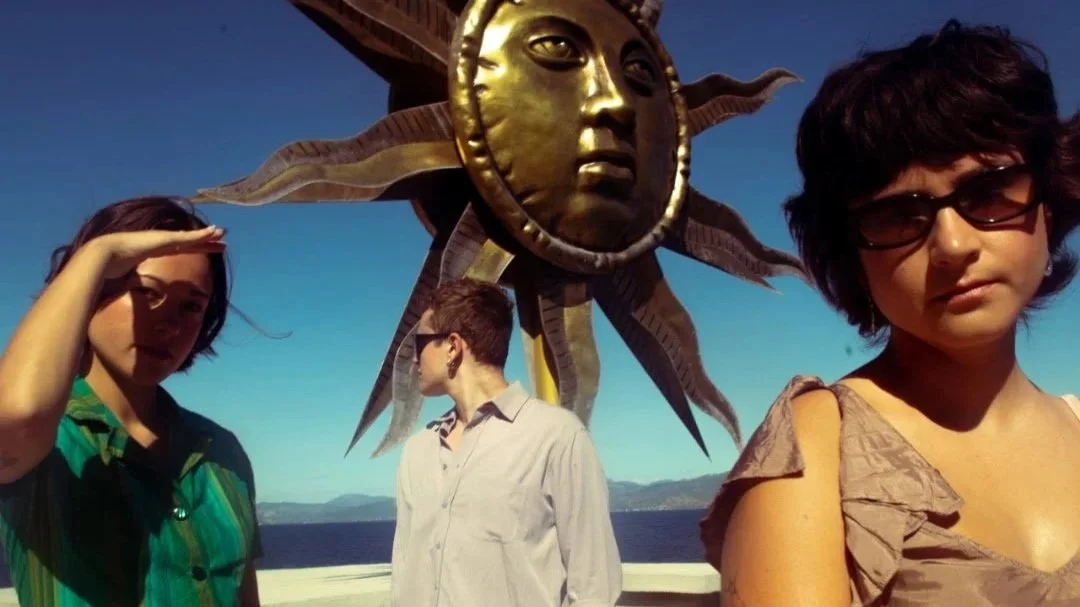
Photo: Neelam Khan Vela
The Orielles’ 2022 album Tableau hinted at a band drifting into weirder waters. With this new LP, they balance the experimentation found on Tableau with a return to the familiar alongside more stripped-back songwriting.
If their early records were scrappy indie-pop postcards, Only You Left is a radio transmission from somewhere stranger. Recorded between Hamburg and the Greek island of Hydra, Only You Left finds The Orielles album exploring contrasts — noise and calm, intimacy and distance — across eleven tracks that feel both reflective and restless.
The Halifax threesome ditch tidy hooks for sprawling textures, obscure rhythms and moments that feel like they’re disappearing in real time. Rather than chasing the breezy indie charm that first put them on the map, The Orielles sound determined to rebuild their identity from scratch — pulling from krautrock, ambient textures and off-kilter dance rhythms. Basslines pulse like motorik heartbeats, guitars shimmer and warp at the edges, and Esmé Dee Hand-Halford’s vocals hover above it all, detached, dreamlike, almost ghostly. It’s messy, hypnotic and often brilliant.
The album begins mid-experiment with Three Halves. Heavy drones and fractured guitars build an unnerving, pulsing atmosphere before vanishing again, like a jam session materialising in real time with the listeners. The result is a Sonic Youth-esque noise crashing with the absorbing minimalism of Stereolab’s grooves.
A hazy groove develops on Shadow of You Appears with basslines circling endlessly and the rising stabs of progressively more beseeching, horror-like strings that push you to the brink of distressing tension. This tension is blunted with the return of the driving force from the crunching guitars in the climax, relieving the listeners from the edge of their seats.
The brooding environment continues with the grungy Tears Are, which strips things back further. The song leaves more space around the vocals, making the emotional tone clearer and more vulnerable. From here, the glowing Embers smoulders gently, maintaining the reflective tone established by Tears Are. Its subtle rhythms and soft instrumentation highlight the trio’s talent for texture and atmosphere, weaving together hypnotic basslines, tilted percussion and gleaming guitars.
Tiny Beads Reflecting Light sparks like sunlight catching on broken glass, its flickering guitars and looping rhythm creating a magnetic thump that feels both precise and endless. The track drifts forward with a quiet, trance-like momentum, each layer of sound sliding gently over the last until the groove becomes almost meditative. Rather than exploding into a traditional chorus, the song blushes patiently, gradually expanding like ripples across water, capturing the album’s fascination with slow-burning beauty.
Like a scream after a moment of sober silence, the murky synth textures, haunting vocals and slower pacing of The Woodland Has Returned contrasts with a welcome burst of energy of All In Metal. It’s driving rhythm and spiralling guitars inject momentum into an album that often moves at a dreamy wander.
The album’s most disorienting moment arrives with You Are Eating a Part of Yourself, a track that begins with a deceptively simple looping guitar motif before slowly unravelling into a cloud of distortion and fractured noise. It’s messy, restless and deliberately unsettling, gradually collapsing under layers of feedback. Just as the album seems to spiral completely off course, Whenever (I May Not Feel So Close) pulls things back into focus. Where its predecessor feels claustrophobic and abrasive, this track drifts in with a softer touch, echoing the dreamy introspection of Broadcast.
Wasp cuts through the building ambience with a sharper, restless energy. Buzzing guitars circle tightly around a dynamic rhythm, giving the track a prickly urgency that feels closer to the band’s indie-rock roots. There’s a wiry tension to it, the guitars crackling with distortion in a way that faintly recalls the art-rock bite of Talking Heads, and it briefly jolts the album out of its dreamlike state. From there, To Undo the World Itself arrives as a slow, expansive finale, gradually stretching the album’s textures into something more cinematic alongside Esmé’s angelic vocals. The track patiently builds and then dissolves into its surroundings like a dying flame, its drifting layers resulting in a cosmic ambience.
The band explore the tension between chaos and clarity, creating a listening experience that rewards patience and attention. Instead of chasing obvious singles, The Orielles have crafted an album that rewards patience and close listening. Rather than repeating themselves, The Orielles continue to push their sound into new territory. Only You Left won’t be the album that converts the casual listener. Nevertheless, for anyone willing to get lost in its drifting, shape-shifting sound, it proves The Orielles are far more interesting when they refuse to play it safe.
Only You Left is out now via Heavenly Recordings.