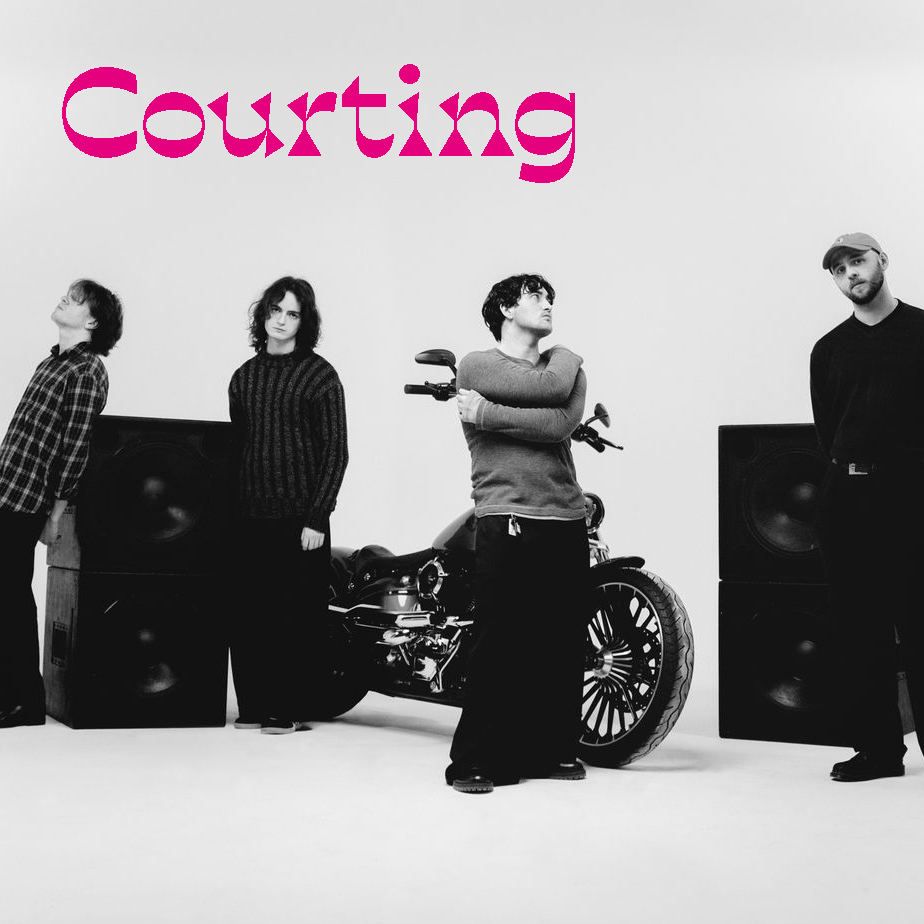
We sat down with the Liverpool band to talk their newest album.
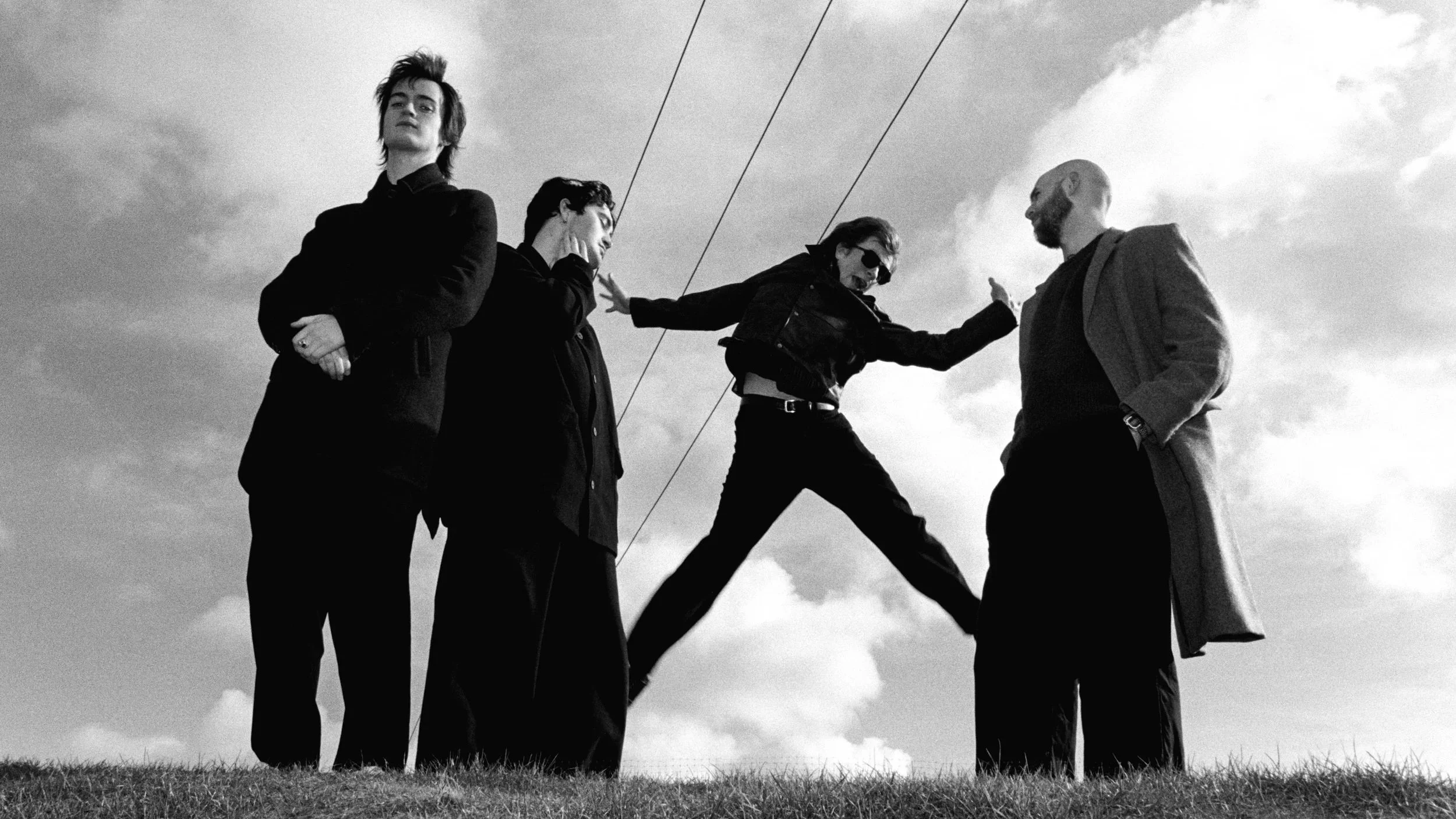
Photo: Charlie Barclay Harris
Courting have never been the type to stick to conventions. From experimenting with production on their ironically named first record Guitar Music, to messing about with pop song structure on second album New Last Name, the Liverpudlian’s joyful disregard for being like everyone else has firmly marked them as one of the UK’s most exciting rising bands.
Eternally evading mediocrity with their marmite-like creative approach, you either love ‘em or hate ‘em. But no matter what side of the fence you fall on, you have to respect the genre-defying quartet for doing it their own way. Now onto their third album in three years – the dual titled Lust for Life, Or: ‘How To Thread The Needle And Come Out The Other Side To Tell The Story’ – it seems Courting have hustled so hard that they’ve found their experimental sweet spot.
While being messy was part of the fun of their first two albums, Lust for Life… – as lead singer Sean Murphy-O’Neill explained – was an effort to “take the kind of things” they’ve “done in the past” and “find a suitable meeting place” for all of them. Blending elements of streamlined rock and pop music with more interesting experimental ingredients, the album has a raucous, live energy while still maintaining the band’s standard knack for a tune.
Featuring a “fictional murder ballad” in the form of title track Lust for Life and consisting of eight songs that all have a twin, the quartet’s latest record is a bold reminder of just how boundless music can be if you’re willing to take the risk. Not only is there tongue-in-cheek rock-pop on Namcy, festival-ready chaos on After You, and dirty proto-punk on Pause at You, but shoegaze also gets a look-in on this distinctive album through the woozy, jazz-washed track, Eleven Sent (This Time).
But despite Courting being too restless to claim any one genre as their own, it’s not genre that they see as being a constraint on creativity. “It’s what people think of you,” says Murphy-O’Neill. Keeping in mind the numerous great bands who’ve been forced to chase the success of their debut album after “whacking twelve catchy singles on there,” Courting have always aimed to avoid being pigeon-holed.
“We just thought if we come off the bat and instantly show that we have no interest in sticking to one thing, then we can’t be criticised later down the line,” Murphy-O’Neill explained. “A lot of bands do that obvious first album and confusing second album, whereas I think if you just whack the confusing one out first, no one’s going to call the second one confusing. It gives you more of a position to hold your ground when you do something experimental, because no one can really say that’s not what you’re normally like.”
Courting dive into this creative freedom with abandon. Shifting musical backdrops at breakneck speed, they’re wired to mess with the unspoken rules of modern songwriting in ways most bands wouldn’t dare.
In a world where authenticity is key and artists are praised for lyrical honesty, the Liverpudlian four-piece use their genre-hopping bravado to stage unique stories in unique ways. As Muphy-O’Neill said, “There’s only so many songs you can write if the only topics you want to write about are love and politics. If you go, ‘I’m gonna write a fictional murder ballad today about a credit card scam’, you’ve probably got something in there. No one can say that’s copied.”
“I think there’s too much pressure put on things being authentic lyrically. I find that the best way to write is to be incredibly inauthentic. It’s fiction – make up characters, make up places. I think with making three albums in three years, we wouldn’t have had enough time to live enough personal experience to write three albums worth of authentic, personal songs.”
Yet, ironically, it’s by being this lyrically inauthentic that Courting have stayed true to themselves. Always on the lookout for new ways to test themselves, as well as new ways to piss people off, Lust for Life’s… two titles, two-toned artwork and mirrored opening and closing motifs prove that this band only seeks to please themselves with their comprehensive concepts.
“It kind of becomes less of a concept album for people listening and more of a writing exercise for us,” Murphy-O’Neill revealed. “‘How can I write to fit the bounds of the idea that I have for this album?’. Rather than us writing songs and asking ‘what keeps these together?’, which I think can be a harder question. I think it’s easier to go ‘I have a question; I’m going to write eight songs that fit that guideline.’”
It’s this deliberate, question-first approach that has powered Courting through years of full-throttle songwriting – but, now, they’re finally ready to ease off the gas. After running full speed at every idea that comes their way, the band plan to step back from writing and recording to catch their breath before they almost certainly decide to floor it again.
As Murphy-O’Neill said: “We’ve got two hours of music [out], people can sit on it now and have an opinion on us. There’s too many bands that people are trying to formulate opinions on when they only have four songs, and it’s like you don’t know if this band’s good. You need to give them time to do what they want to do. We have enough music now that people can decide if they love or hate us, and rest assured in a few years we’re just going to do something different.”
Read the interview in our first print issue, out now, and available to order here.