Dutch Interior: “Our relationships with one another never cross that line of being business”
The American band talk new EP ‘It’s Glass’ and last year’s ‘Moneyball’.
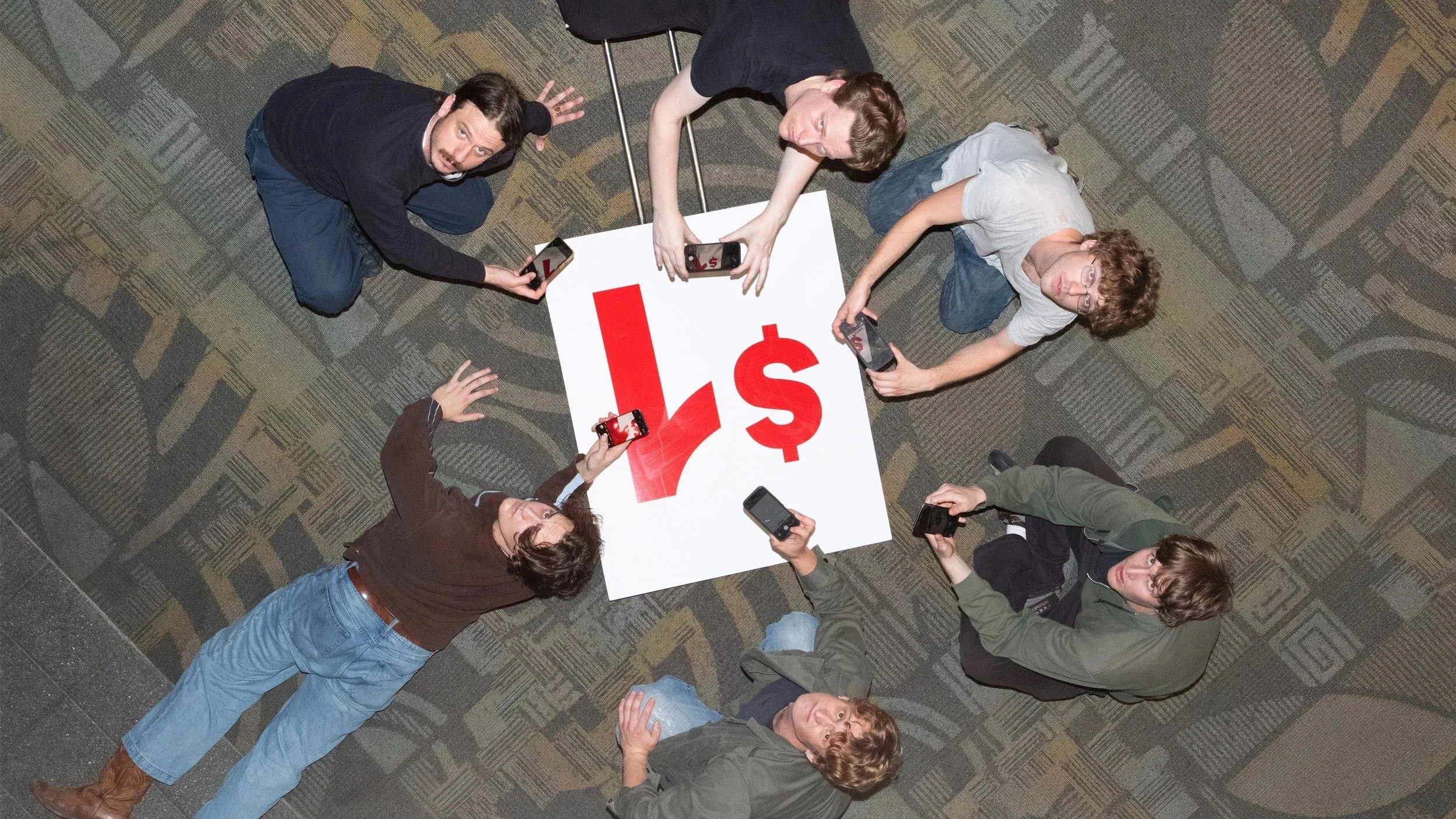
Photo: Kyle Berger
After the release of their first studio album, Moneyball, last year, the LA County six-piece showed no signs of slowing down with their latest EP, It’s Glass. We caught up with Noah, Davis and Conner to discuss origins, their development as a band, and what the future holds.
First of all, I wanted to ask where your name came from, but I just found out about five minutes ago. In your own words, where did you land upon your name?
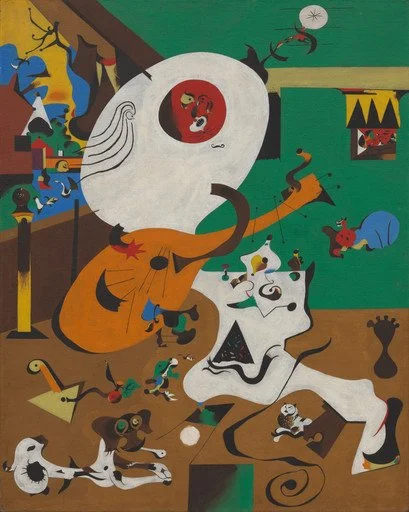
Dutch Interior (I) by Joan Miró (1928)
Noah: The name came from our bass player, Davis, who also does a lot of our art and aesthetic stuff. He had this name floating around at one point; I think Dutch Interior was going to be like an album title for our first little project, then it turned into the name of the band.
He got it from a Joan Miró painting that he really liked and was special to him. The meaning behind it evolved over the years, where it became kind of like a parent that you know. There was post-band assigned meaning to the name, which was fun and cool to us, making it even more special.
Were there any other names that were in the running?
N: Conner, didn’t you have a name? Well, I know you do; I’m just seeing if you’ll say it.
Conner: Yeah, the name of our first record that’s like a set of demos called Kindergarten. We were going to call ourselves Kindergarten, and that record was going to be called ‘Dutch Interior’, then we ended up switching the two.
Why did you make that decision? I feel like there’s probably a band called Kindergarten now.
C: Yeah, there was a band called Kindergarten, and also we decided it wasn’t that cool of a band name.
Does a member of the band design the album artwork?
N: Yeah, so Davis, our bass player, he does everything as far as like art and stuff, and he’s done all three album covers — he’s actually walking up right now because we live together.
Nice to meet you. Where did that stem from? Did you study art or have an interest in design?
Davis: I took a community art class when I was in high school — it was a bunch of retirees and one of my friends. He became a tattoo artist, then we both learned how to paint and, from that, I started doing art stuff.
Where do you get your inspiration from? Do you make the art with the intention of it being the album cover?
D: I make stuff all the time and I’m like, ‘this one’s really cool’, and I put it in a folder on my laptop that says ‘album cover’.
With the recent EP, It’s Glass, how did that cover come about?
D: When we go on tour, I have a camera, I take thousands of photos and I’ll organise those thousands into maybe ‘this thing’s cool’ and I’ll take that and make it into something cool.
If you could describe your genre without saying a genre, what words would you use?
N: Interesting. What’s that place where you dip things in cheese?
Fondue?
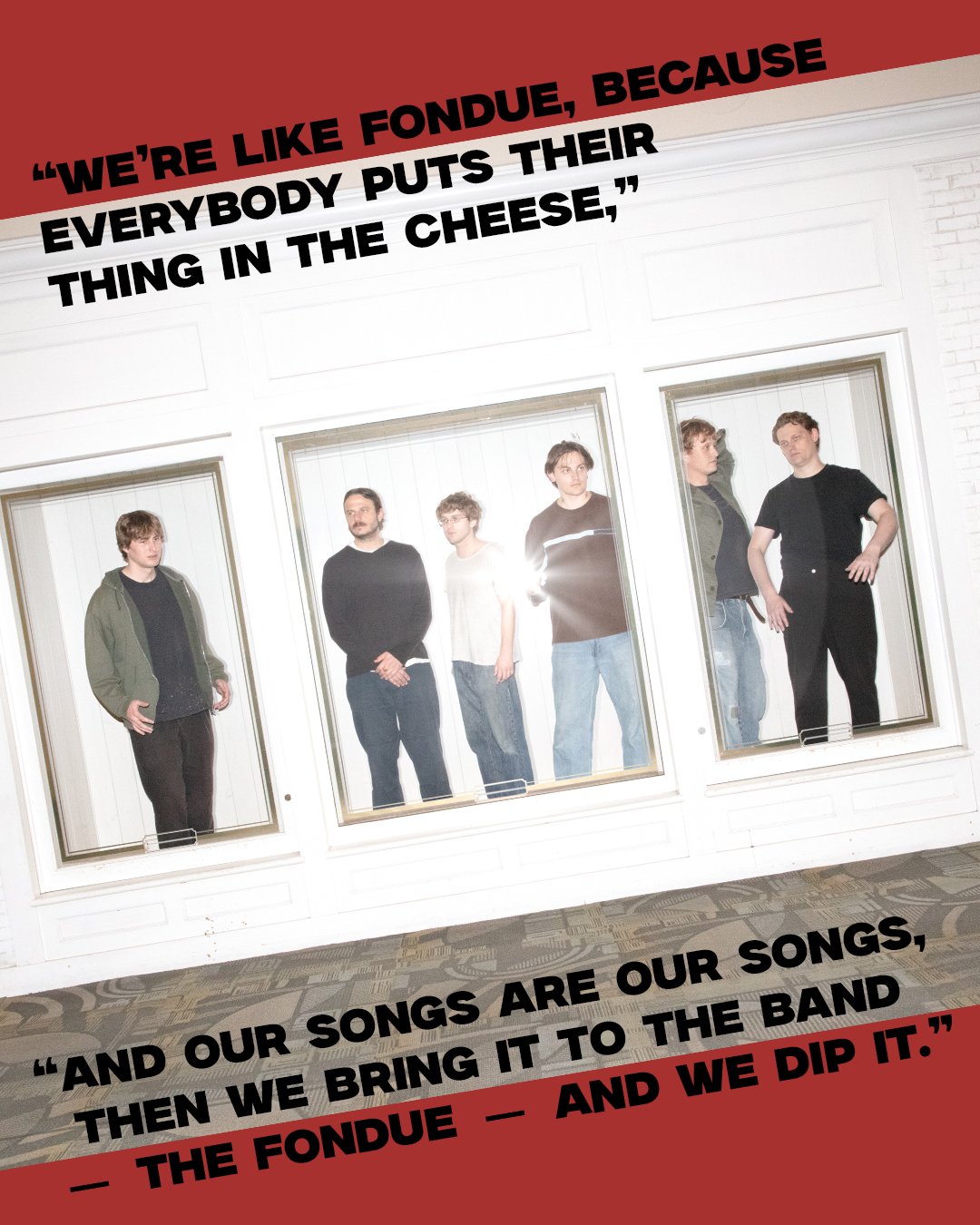
N: Yeah, we’re like fondue, because everybody puts their thing in the cheese, and our songs are our songs, then we bring it to the band — the fondue — and we dip it. That’s pretty good.
D: I like that.
N: Overrated, not for everyone.
D: Yeah, exactly. Very decadent and self-serving. A lot of people actually don’t like that.
It’s been a year since Moneyball was released. Has the album’s meaning changed for you at all over the course of the past year? Has your favourite song changed at all?
N: As far as favourite song, I find that when we go on tour, new songs spark new interests when we’re playing them live. A song like the opening track, Canada, evolved into a much bigger song live. I really love that song in a new way now after touring with it.
Are there any particular songs that you found people received better than you thought they would?
N: I’m trying to think. I feel like Jack has an answer for this one, but he’s not here.
C: For me personally, I don’t know if you guys remember how unsure we were about Fourth Street.
D: That’s what I was going to say — we almost cut it. Then people were like, ‘Yeah, I love it’.
C: Yeah, now I feel like the song people come up to me and say anything to me about my involvement in Dutch Interior has to do with Fourth Street. I’m like, ‘Oh, yeah, that’s my boy Noah’s song’, but they’re like, ‘Yeah, dude, I wake up to that song’.
D: I don’t think I know what people like.
Has there been a song you played live where you’ve had an unexpected reaction from the audience?
N: Fourth Street kind of kicks live. I mean, that’s like a rocker anyway. Sweet Time rocks.
C: Yeah, Sweet Time.
That’s my favourite on the album.
D: Another Noah song, God damn.
N: We do like a five-minute outro on that song when we play it live. It’s fun to see the audience reaction and maybe boredom at a certain point.
D: The excitement.
C: We get ‘em back.
When you were writing and recording It’s Glass, was it always going to end up as an EP?
C: When there’s as many songwriters as there are in Dutch, there’s no shortage of songs. Pretty much the second we were done with recording and rolling out Moneyball, we all decided we wanted to get right back into the studio.
We weren’t sure if another full-length record coming out so soon after was a good idea, but we definitely wanted to get some songs in particular out that were those songs. It felt like a good in-between thing to do between Moneyball and the next record we put out.
Did you ever second-guess naming Go Fuck Yourself as that? I think it’s a great title.
C: Yeah, I mean, it was titled Go Fuck Yourself in the voice memo note.
D: The publicist didn’t really like that one.
What are the underlying themes of the EP?
N: I feel like, compared to the album, the EP is a little more chaotic. That’s a good word. It’s more like an expression than it is like a thematic project, which I think is cool, especially for an EP.
C: Yeah, it becomes cohesive in the sense of that’s what it is to me.
Are there any inspirations from daily life you’ve pulled from?
D: I mean, I feel it’s so hard because it’s such a collaborative process between the six of us that it’s so hard to pull from one inspiration. You know, we’re all giving ideas from different places.
What helps add to the conversation of why maybe people think our music sounds new and interesting, when to me, it sounds like we’re not reinventing the wheel or anything and we’re just… — like, these are pretty straightforward traditional songs. Clearly, when other people listen to it, it’s so derivative of all these other inspirations. I think that comes from all of us being into like slightly different genres of music, but also the same genres of music. I hope that made sense.
How did you all meet in the first place?
N: There’s a long history. Davis and our drummer met as literal babies with Hayden’s brother, [Shane]; they all met at a young age. Me and Conner met when we were in Elementary School. We were like eleven or something.
C: Noah and I met when we were in sixth grade…?
N: Yeah, like seventh, eighth grade, then Jack in high school. It’s all very like early origins and a lot to do with when we started discovering what kind of music we were into. Obviously, we were babies. We grew up together and were discovering music and learning about [what] our influences would be, when, you know, you’re developing as an adolescent in that super important time period where, like, that’s an album you’ll remember forever because you heard it when you were seventeen.
D: Noah had a CD player in his car and there were like three CDs and one of them was The Strokes. We listened to it like 10,000 fucking times.
What Strokes album was it?
N: Oh, it was Is This It.
How did the idea of the band start?
N: It was a pretty easy kind of thing. We were living together, like half of us. Then, during 2020, we ended up spending a lot of time isolated between the six of us. We had a period where Conner brought over his tape machine, and we started jamming in our living room. Naturally, the next step was like ‘let’s record some songs’, not intentionally or anything. Each day we would come in to pass the time, and then someone would say, ‘Oh, like I have this song. We could record this’ or ‘Does anybody have anything?’.
Eventually, you know, we recorded like ten songs, and didn’t have any plans for it or a band name or an idea of a band, just kind of all of us together. Later on, the sort of idea of a band came together, like years later.
D: Someone asked us to play a house show. We were like, ‘Oh, yeah, I guess we could play a show. That’d be kind of fun’. Then we did it, and we were like, ‘What if we made another record?’, and it snowballed from that. Very, very loose and casual until, I don’t know.
How do you balance your friendship with being in the band?
N: I mean, it’s pretty easy so far. We’re all very comfortable with each other. When it comes to music, we all take it very seriously. When we come to being friends, you’re very, you know, I don’t know – it’s become something you learn and work on too. So far, so good.
It sounds pretty natural to me.
C: Yeah, it feels to me that it’s like somewhere along the way, without like a sudden change, where you wake up and it feels like this. At the risk of sounding corny, looking back on it, somewhere between starting the band and right now, it went from like friends to family, you know? I mean that in the sense that, like, we see each other more than our own family.
We meet up like four times a week at least. It’s also awesome because it’s like a friendship and a relationship that you don’t even have to try with. We have these days that we’re like, ‘Oh yeah, we’re going to work on stuff’, then we end up being together, laughing and hanging out. It’s great.
Most of the time, it feels effortless, but then it’s the same thing with family. There’s always issues that rise up, and you figure those out, but it’s definitely a good relationship. When it comes down to our relationships with one another, it never crosses that line of being business. Sometimes it’s just like a business relationship; we have to do business together.
That’s a great way to put it. You do the production, don’t you? How did you get into that?
C: Yeah, I’ve done all the stuff so far. Back to the OG days when I pulled up with my tape machine, I was just the one that was recording everything. Then it went from us being in an apartment with my tape machine to starting the ideas of being like, ‘Oh, let’s set up the tape machine in a garage with a better-sounding environment for the next record’.
We all built this studio for Moneyball that I was originally planning on having be a place for me to actually take some steps to [being] a working producer, but then the band started getting busy. It was never something I intentionally tried to do, like ‘I want to produce our records’. I mean, I always wanted to, but it felt essential and natural and fun.
Even for the most recent EP, getting to produce a batch of songs out of a real studio and then always just finding the next step and moving forward. There’s been lots of talk about working with a new producer for this, like for the next record we end up working on.
It’s less of, like, I’m trying to take on a title of being the band’s producer. It’s just what has happened so far. I kind of walk around that because I think everyone produces a little bit in the band. I’m just the one that’s on the computer or the tape machine, but we’re all creating this mood and environment together that the songs capture. I mean, I produce, I work the computer, but I’d like to think that the whole band produces all of this stuff.
It feels really collaborative. Do you write songs individually and bring them together?
N: Yeah, usually. It’s pretty individual as far as the song origins and like the original songwriting, we’ll do it separately. We’ll make demos ourselves or work on it in our bedrooms and then we’ll get together for the next record.
That’s when we start presenting our songs to each other in an environment where usually we’re in the studio and we’re going to record that song that day. Everybody’s hearing it for the first time that day, which has been a fun process. When the song gets given to the band, it becomes, like, everybody puts their hand in the pot and we start to build what will become a Dutch Interior song as opposed to your own personal thing. Usually, lyrics tend to be written by the person but, when it comes to music arrangement and the tone and sound, it can really go anywhere when it becomes the band’s.
If you could only show one song to someone who hasn’t heard your music before, what would you choose and why?
N: I mean, this is a bad answer, but I’ll Be Damned. It’s like our top song. I feel it kind of perfectly encapsulates the vibe; a live recording in a garage where we’re laughing at the beginning. There’s like a funny acoustic guitar — not funny — solo that’s a little tongue-in-cheek, and the lyrics are fun. I think it’s a good introduction. Like, it’s silly, but there’s a lot of chords. There’s a much bigger world outside of that song, but it’s a good walk through the threshold.
D: I don’t do I’ll Be Damned because my family’s hella Christian. Conner, what’s yours? Do you wanna just name each other’s songs?
C: I’m going to say Oscar, Please?.
It’s Glass is out now via Fat Possum.
You can also find this interview in print. Order Issue 2 of The Indie Scene Magazine here.