
Songs You Can Feel: Flip Top Head talk rewriting their sound on ‘Trilateral Machine’
The Brighton art-rock band discuss their new EP, stripping things back and embracing a more organic approach.
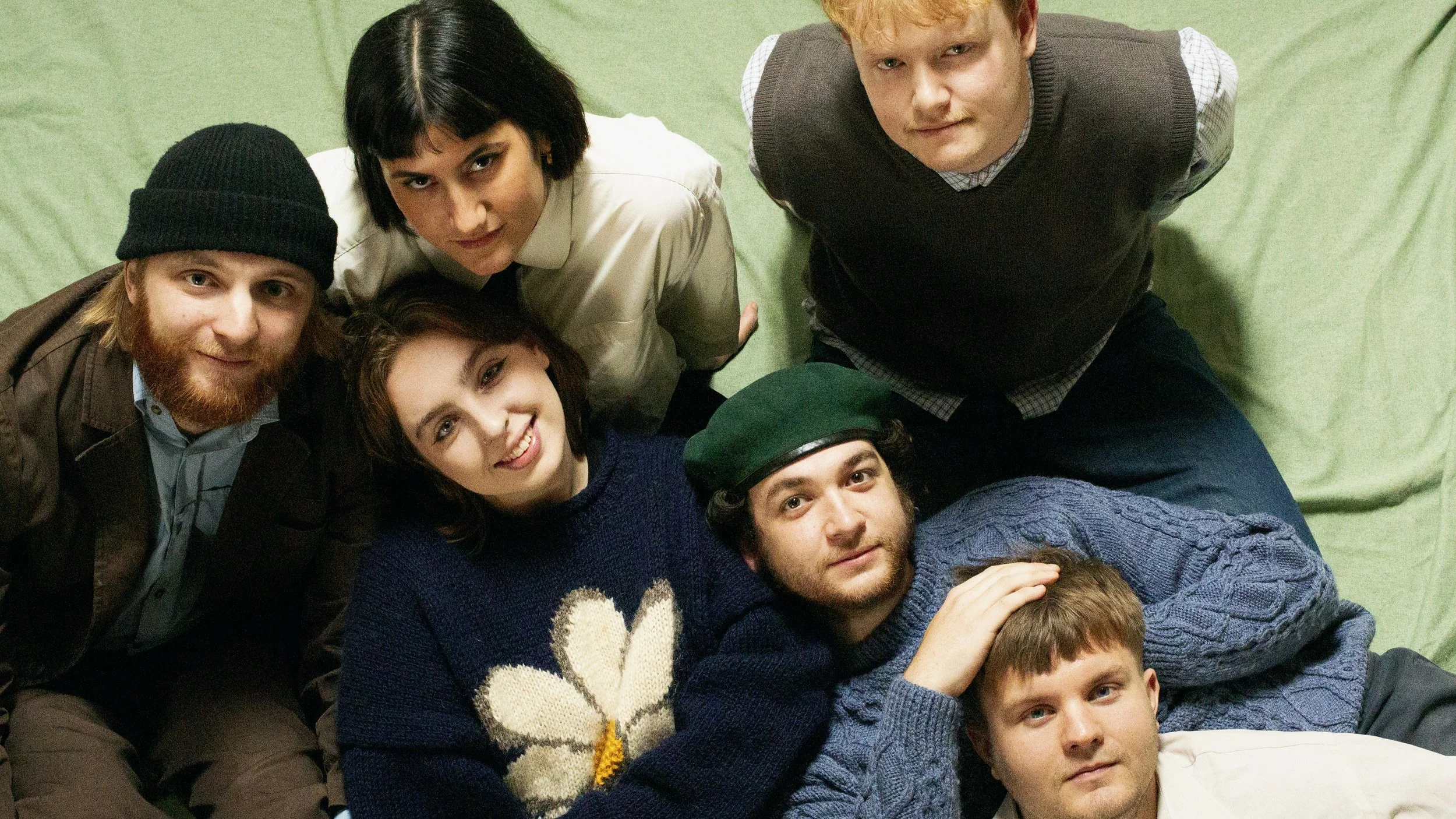
Photo: Oleta Mary
Balancing delicacy with well-placed force, Brighton’s Flip Top Head create music that is both carefully constructed and instinctively alive. Built from wood, metal and machinery, their sound shifts seamlessly between intimate baroque-pop and sweeping art-rock, while still remaining deeply human at its core.
On the release day of their sophomore EP, Trilateral Machine, we caught up with vocalist Bowie Bartlett and bassist Marie Freiss to talk about how they uncovered the tactile world behind their most confident release yet.
Happy release day! How does it feel to finally have ‘Trilateral Machine’ out in the world?
Marie: Really good!
Bowie: I mean, this is our second EP, so I feel like we’ve had this feeling before with Up Like A Weather Balloon, but this one feels bigger. It feels more important to us as a band. I think because it’s such a build-up of anticipation, and obviously we wrote some of the songs two years ago and recorded them so long ago that when it actually happens, it’s kind of just like…
M: I nearly forgot it was going to be out, you know. All of a sudden, I was like, ‘Oh, it's coming out’. It feels like it was already.
Why does it feel more important than the last?
B: Don’t get me wrong, the first EP was so important to us, and, at that point in time, we were a seven-piece. We had the trombone as well. So, with this new EP, it’s kind of been transformative in the sense that we were sort of rewriting our sound. We’ve found what our sound is again since that change, and as much as we miss Alfie [Beer] every single day and we miss his presence, I think we feel really confident and comfortable in our sound now, and the EP really shows that.
‘Trilateral Machine’ feels leaner and more exposed in places, as if some layers have been deliberately peeled away. Why do you think that is?
M: I think losing a trombone definitely guided us towards that direction because the trombone is such an impactful instrument and can take so much space. We kind of had to go back to what we can do without that and how we can write with a smaller ensemble, just go back to basics.
B: We spoke about that with Theo Verney, our producer, as well. Before we even really knew what songs we were going to be recording, we had a conversation with him about this body of work and what it would be, and he almost instigated that stripped-back sound. Obviously, it’s not stripped-back, and there’s still lots of instruments, but the words he used that always stuck with me are ‘woody’ and ‘organic’. I think that sort of cleanness comes from that. That, and the fact that this time around, there were very few overdubs and a lot of what you hear is how it will come across live, and that’s a really important element to us.
Did that approach come from playing these songs live as well?
B: Yeah, we’re not really too afraid to play a song in its unfinished form live. I think a lot of these songs probably have been played live in many different ways, and live does help inform the direction of what the finished product ends up being.
M: Some songs are really quickly written and some of them need time to evolve. I think we need to hear them in different versions to see which one fits best and which one we like the best as well. So, we’re not afraid to spend a lot of time rewriting sometimes.
In terms of the concept of the EP, did that reveal itself early on or once the tracks were sat together?
B: Kind of the latter, and it was almost the same with the first EP as well. Often with our songs, the lyrics are written months after the rest of the song is there. Rarely do we come in with a strong idea of what the lyrics will be and match it to a song, so there isn’t an overriding concept. You start to pick it out later down the line, which I find really interesting. It’s almost like, ‘oh, I’ve got this whole theme that I didn’t even know that I was writing about’. Then, when you speak to other people, and they come to you with what they took from it, the meaning and concept evolves a lot.
For this one, the thing that sticks out to me is that each song is really tactile. There’s lots of different materials. There’s machinery, there’s metal, and then there’s also the sound being woody and organic. It feels like you can feel the songs. But I’m excited to hear what other people think and find from it as well.
Literature clearly plays a role in your writing, particularly with Porcelain Plugs and its link to Sylvia Plath. Beyond music, what other art forms shape your music?
B: With Sylvia Plath, it’s a bit of an odd one because I think it’s the first time that a piece of literature has directly impacted and been used in a song. But with the majority of us living in Brighton, it’s a really vibrant scene of not just music, but art and poets. We’re constantly surrounded by lots of different art forms, and we’re all quite aligned in the types of things that we listen to, watch and read.
M: You and Bertie [Beer] (vocals, guitar, keys) often come across little quotes or little stories from strangers. When I see you writing and hear where that came from, it’s really interesting how both of you are struck by really small things that happen.
B: That’s true, actually. A lot of the songs are most directly impacted by storytelling and encounters with people, and what we’ve taken from that. And again, storytelling happens as a collaborative thing as well.
When you spend a lot of time gigging and are often in small, enclosed spaces with each other, we know a lot about each other. Ollie [White] (synth, guitar, percussion) especially will tell stories of stuff that happened to him when he was like seven. One of them was the story of his local parish vicar that had no nails and that’s what became one of our songs on the first EP. There’s a lot of inspiration from the Flip Top Head folklore and the people that we meet.
I love that. You need to do a deep dive into all these little stories at some point.
B: Yeah, we’ll write a book one day.
Brighton seems deeply woven into your story. What has that city and its scene allowed Flip Top Head to become that might not have emerged elsewhere?
B: The people and the opportunities in Brighton as an upcoming creative are pretty endless. Between all the bands and artists, it’s just a constant surge of support. It sounds really cheesy, but it is just a big community. If there ever is comparison, it’s of the healthy kind. There’s no jealousy. There’s never any kind of beating down; it’s just a constant lifting of each other and the people around you, and it’s been really important in shaping us for sure.
What do you hope listeners will get from Trilateral Machine?
B: From us as a band, what we want people to take from it is collaboration and the freedom of creating. This EP speaks to that a lot, like we were saying with the organic side of it and linking it to live. I hope that people will listen to it and it makes them excited to see it live, because for us, releasing music is great, but the best part is playing it live. But also, I hope people try and find their own meanings in it and share it as well, because we love hearing what people take from it.
Trilateral Machine is out now via Blitzcat Records.