Mei Semones: “I just wear whatever I enjoy, and whatever I feel comfortable in”
The Brooklyn-based singer spoke to us about art, fashion and her latest album, ‘Animaru’.
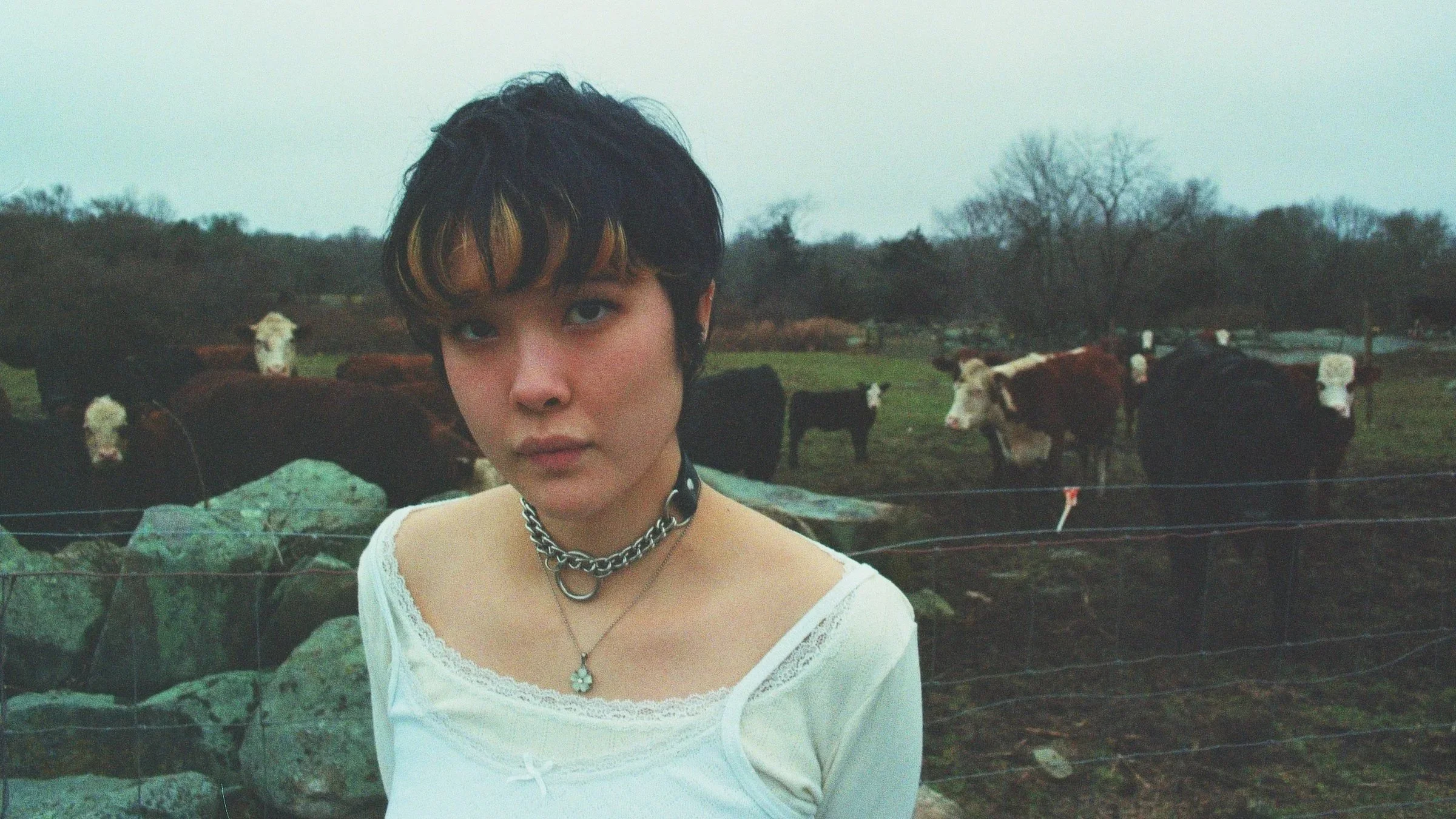
Photo: Lucas O.M.
As the London summer began to unfurl its golden rays, I found myself enveloped in the dreamy, bossa-kissed melodies of Mei Semones at Camden Assembly back in April. It was her first headline show in the Big Smoke, and her voice — both tender and commanding — wove a spell over the crowd. A few weeks later, I had the chance to chat with Mei, diving into her musical world, her effortlessly cool style, and the stories behind her art. Fresh off a conversation with her collaborator John Roseboro, I was eager to hear her perspective.
Hey, Mei! How is touring going?
Hi! I’m having a great time. I just came off my first European tour with Panchiko, which was amazing.
I spoke to John [Roseboro] recently, and we talked about how you two got to know each other. I’d love to hear your side of it — when did you meet, and how did you start collaborating?
Yeah, I think the first way I remember us connecting was on Instagram. I was still living in Boston, and I think this was probably right after he had moved to New York, maybe, and then I moved to New York shortly after him, maybe a year or so after him, and then we met up in person for the first time, and just became friends from there. I was a fan of his music, and I think he liked my music, so it just made sense for us to hang out, be friends, and start working on music together, and it’s been a great fit. I really enjoy our voices together, and our playing and songwriting styles fit well together.
You both have a candid cadence to your singing style, which I love. When I saw you recently at your first headline show in London, I was in awe of how your vocal style is simultaneously powerful and beautifully delicate. Speaking of style, your aesthetic is very eye-catching. Are you influenced by fashion?
Thank you. In terms of fashion, I honestly don’t know anything about fashion, so I feel I just wear whatever I enjoy, and whatever I feel comfortable in. Most of my clothes are thrifted, usually from Goodwill or Salvation Army, or the second-hand stores. I also have a good amount of hand-me-downs from my sister, because she is a little more stylish, I would say, and gets more clothes than me, so I will sometimes take the stuff that she’s not wearing anymore. Recently, I’ve been getting some gifts from brands, so that’s become a part of my closet too, which has been nice.
When I first saw you on Instagram, there was something immediately iconic about your style, so it’s cool to hear that you thrift and rock hand-me-downs.
I really appreciate that, and I’m glad to hear it because I don’t put that much thought into it, but I’m really glad that it comes across that way.
Your artwork seems very cohesive and consistent too, I know your mum does a lot of it. Can you tell me about your relationship with her and how she got involved?
It’s great. The first time she made art for my music was the Kabutomushi EP, which came out in April of last year. Since then, I’ve asked her to do all the artwork for the album, singles, posters, and sometimes merch. She’s very talented: a professional graphic designer, a great illustrator, and she paints a little bit, with a great eye for it. It’s special because my mum is one of the people who knows me best, from when I was born, which is crazy. Her artwork is a good representation of who I am as a person and artist, and how well she knows me comes through in it. It’s really special to have her work on it, and I’m grateful she’s down to do it.
That’s so beautiful! Your album cover, the Rat with Wings—what’s the meaning behind that image?
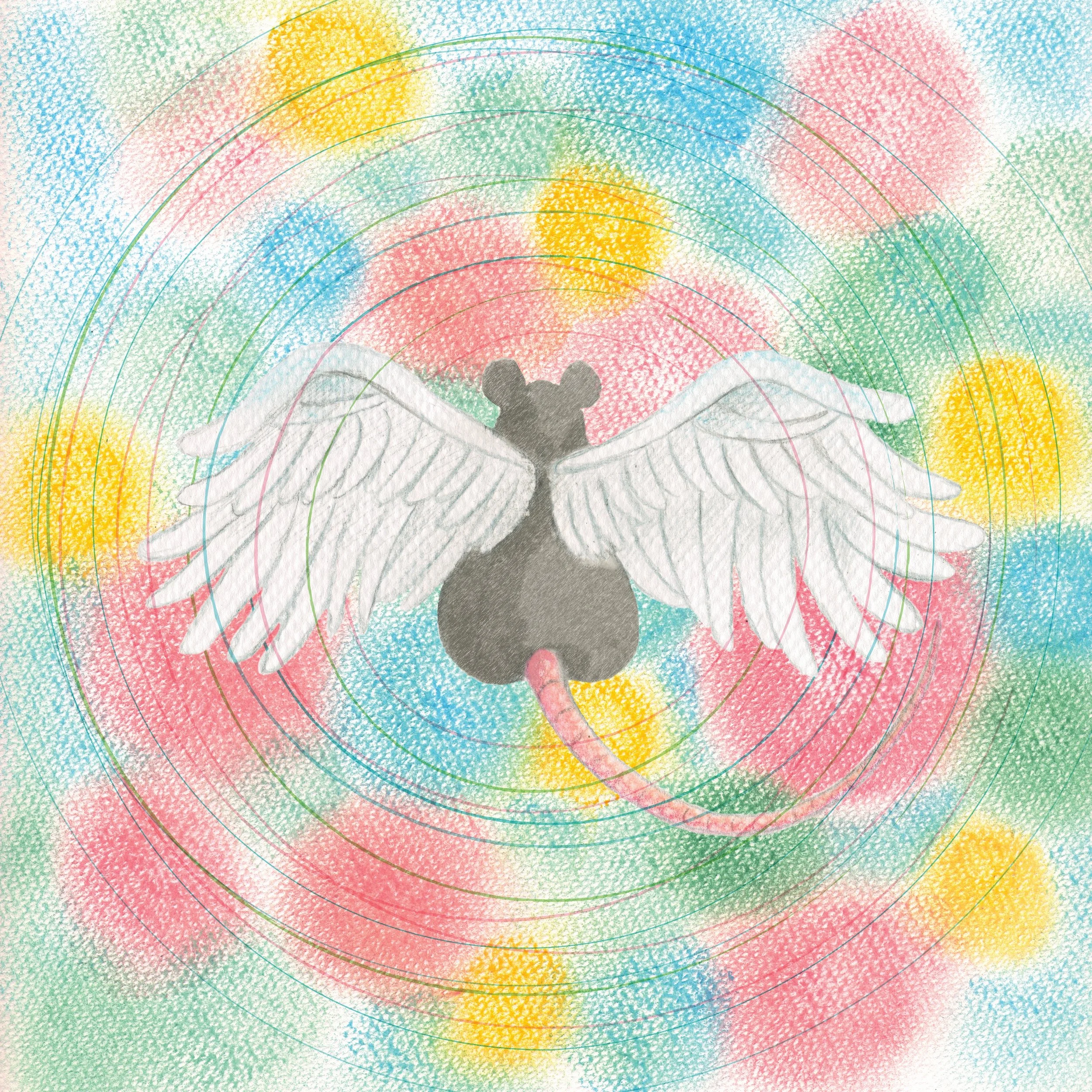
Rat with Wings is one of the songs on the album, and the imagery came from the song. What it means to me is when someone turns out to be different from what you thought they were. At first, you see beautiful angel wings, then you realise they’re attached to something not as nice as you thought. That might be a negative read or rude to say about someone. But I genuinely enjoy rats as an animal, and seeing them in the city. I’m fond of them, and I think it’s a cool image for a rat to have wings. It’s a recognisable, memorable image, so I thought it would be good for the album cover.
Do you dabble in visual art yourself, like drawing or painting?
I used to do it a lot more when I was younger. I really loved drawing and, in third or fourth grade, I wanted to be an artist, but I don’t draw as much anymore.
I know you’re a big John Coltrane fan. If someone’s new to his music, which album would you recommend?
Right. Maybe Coltrane’s Sound, that album. I mean, I feel it’s kind of in the name, but you can get an idea of his sounds.
Do you have any favourite jazz guitarists who’ve inspired you?
When I was younger, when I was first learning jazz guitar, I really loved Grant Green. I also really enjoy Wes Montgomery, Jim Hall and Kurt Rosenwinkel. Those are the main ones that come to mind.
You’ve got that bossa nova vibe in your music. Any favourite bossa songs you love to sing or have learned?
It’s hard because there are some I really enjoy but haven’t learned to play or sing. One I learned to sing, the first in Portuguese, was Corcovado (Quiet Nights of Quiet Stars). I enjoy that one. I also enjoy Chega de Saudade, in English it’s No Blues, No More Blues.
Chega de Saudade is a gem! I find it tricky to nail those chords and melodies. How did you get into writing bossa-inspired music?
The first song I wrote with a bossa influence was my first ever song, Hfoas. When I started writing it, I envisioned it as an instrumental piece, trying to write a jazz tune. I was inspired by the changes, but I wanted it to be a bossa tune. Then I switched directions. At some point, I thought, I’m going to try singing over this, and it became a vocal thing from there. I started writing in that style, thinking it was going to be instrumental, and then added lyrics after.
When did it hit you that music was your thing? What was that journey like?
I don’t think there’s a certain point where it clicked. I don’t remember ever thinking ‘I’m now deciding to do this’. For me, it was a gradual thing. In middle school, I played guitar, continued in high school, and at some point realised there was nothing else I was interested in doing at all. It was a gradual thing, realising there’s nothing else I care that deeply about.
Totally different vibe, but do you read much? Any favourite books or authors?
I haven’t been reading as much recently, but I read a lot growing up and in high school. My favourite author is Murakami Haruki, a Japanese author. My favourite book by him is Wild Sheep Chase, one of his earlier works. He also has one called Pinball 1973, another early work. I’ve read most of his fiction books, and I’m a big fan of his writing and his way of telling a story. It’s very interesting.
I read Murakami’s Kafka on the Shore — loved the cats and absurdist vibe. Your music has nature woven in, like Kabutomushi and those beetles from your childhood. What’s your relationship with nature like?
If I’m honest, I don’t really consider myself to be that much of an outdoorsy person. I’m not one to want to go on a hike, necessarily. I mean, I will, but it’s not an actual hobby for me. But growing up, I would play outside a lot. And so a lot of the songs that have nature themes are usually drawing from memories of what you were saying, going to the park to catch these beetles, or, on the album, there are a few songs that are reminiscing on playing in the woods behind my parents’ house in Michigan. I would say I enjoy nature a normal amount. I think the songs that are inspired by that are more reminiscing about when I was a kid playing outside and stuff.
Growing up, before music took over, did you dream of being anything else, like a fireman or an astronaut?
Yeah, I think it was actually in third and fourth grade. I think I wanted to be an author; I wanted to write books. And then a little bit after that, I wanted to be an artist and make visual art and stuff. Those are the two big ones that I remember.
So, creative pursuits have always been your preference?
Yeah, I guess so. I mean, there was one point in high school where I thought I was interested in psychology. But no, I’m not. It was a very short-lived interest.
Let’s switch lanes again – who are your main vocal influences? Any singers that stand out to you?
I’d say Gilberto. I’m inspired by his singing: João Gilberto. He’s great. I love how soft his voice is. What you said, the candidness in his voice, it feels like the way he sings is how he would speak to you. He’s not putting on a performance. It feels like he’s trying to communicate directly, which I appreciate and want to do in my own singing — or I’ve tried to, depending on the song. I also enjoy Chet Baker’s singing. He has a smooth voice, and his intonation is spot on. I feel he sounds like an instrument. Obviously, the voice is an instrument in many ways, but the way he sings, the intonation is great. I’m trying to get better at that.
Your voice was stunning live, such a joy to hear. I totally get the Chet Baker reference – his singing is like his trumpet playing, so musical. I heard João Gilberto developed his style of singing super quietly in his sister’s bathroom during a bluesy phase.
I’ve not heard that exact story, but someone told me the way he would practise singing was by looking at himself in the mirror, trying to sing as softly as possible. That’s a crazy way to practise, looking at yourself in the mirror. It’s intense. If he did that, it worked. It did something for him.
You were only in London briefly, but any memorable moments? I saw you mentioned Big Ben in another interview.
Yes, I went there. We walked by it and went to a couple of squares: Trafalgar Square and Leicester Square, I think. I went to St. James’s Park. I got to do the main touristy stuff because my friend, the artist Liana Flores, was hosting me and kindly showed me around some basic touristy spots. My favourite place was St. James’s Park because there were so many different types of birds. I had a really nice time looking at the birds and flowers.
You’re in New York now. What’s it like living there? Any ups and downs for you as a musician?
I really enjoy it. It’s a great place for music, with many good venues and a pretty good scene. There’s a wide range of places to play, so there’s something for everyone. As a city, it’s inspiring. There’s so much going on; the moment you step outside, there’s lots to see and look at, which I enjoy.
Congrats on your album release! You’ve got a big tour ahead. What are you most pumped about?
I’m looking forward to all of it because this is our first headline tour. I’m excited to headline, see who comes out, meet different fans, and perform with my band. If I had to pick one part, I’d say Fuji Rock in Japan. I’m so excited because it’s our first festival and probably the biggest show we’ve played so far. I’m also excited to be in Japan with my band, as most of them have never been. Having that experience with them is exciting. I’m also going to Taipei and Seoul after, and I’ve never been to either, so I’m excited for those shows.
I love what you’re doing, Mei, and I can’t wait for the album.
Thank you so much. I appreciate it. I hope I can play in London again soon.
Animaru is out now via Bayonet Records.