Inside ‘Small Hours’, the debut EP from Raining Blue
Raining Blue talks us through her debut EP ‘Small Hours’, reflecting on a period of change and learning when to sit with how things feel.
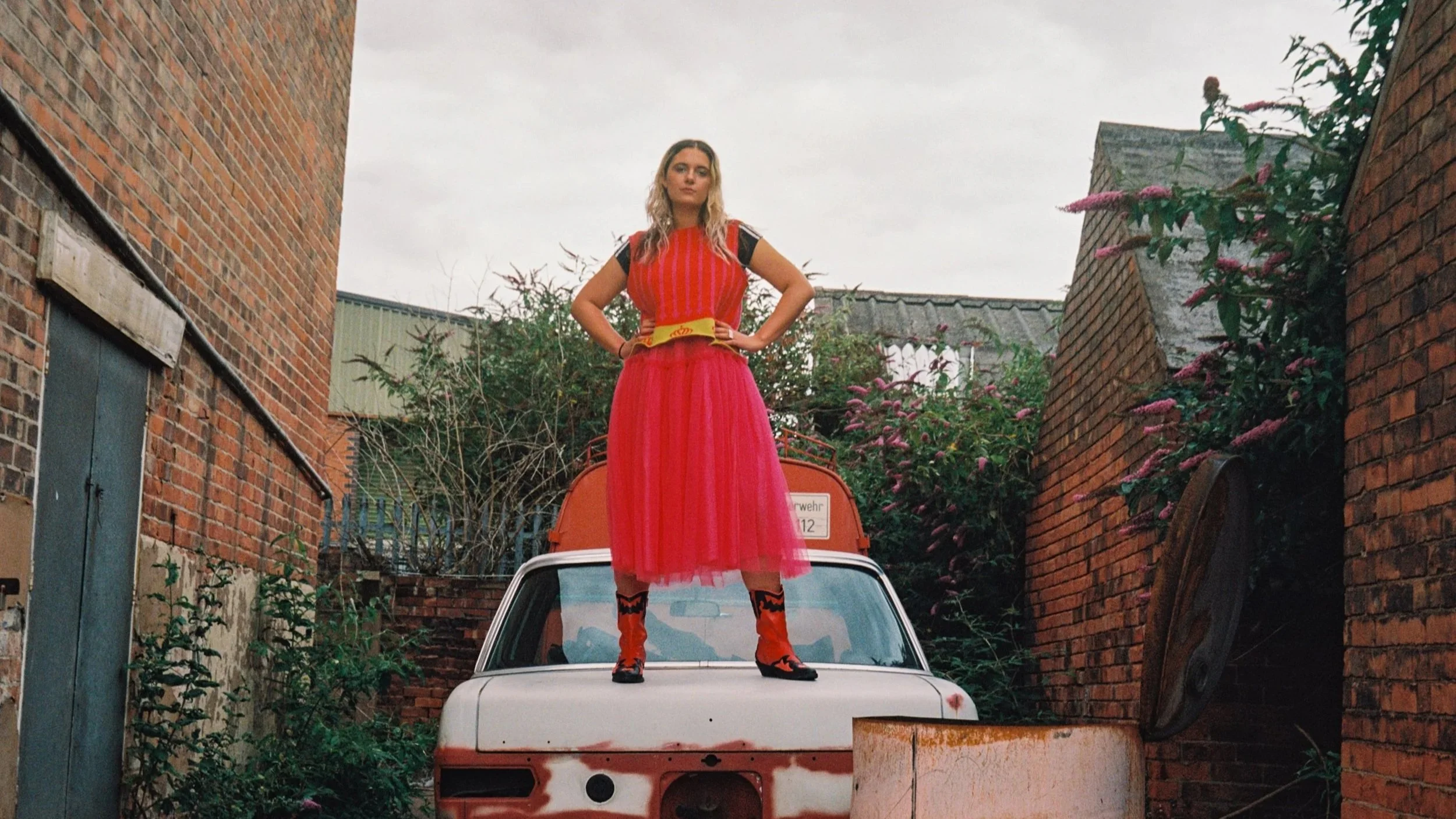
Photo: Lewis Recordings
From the moment the call connects, Camille, the voice behind Raining Blue, feels less like someone being interviewed and more like a friend you’ve known for years. There’s an ease to her that settles the conversation almost straight away, letting it move naturally between lighter moments and quieter reflections.
“I’ve always done music,” she says, almost offhand, as if it’s something she’s never really questioned. “It’s just always been in my bones.”
That instinct runs quietly through her debut EP Small Hours, which reads as a collection of moments gathered rather than arranged. Written over the last few years, the record captures her life as it was happening, without trying to tidy it up or make sense of it after the fact. “It’s kind of just my blog,” she adds. “Everything’s pretty open.”
The EP opens in a more sombre place. Nothing in the Morning stays with days slipping past without much changing, capturing the tension between wanting momentum and feeling stuck where you are. With Camille’s low-toned vocals and single, melodic guitar notes at its centre, the track keeps things stripped back, allowing that sense of smallness and isolation to come through.
Much of Small Hours returns to the point where her early twenties began to shift. On I Miss the Sound of the City, she looks back on her time in Nottingham before moving to London, talking about those years with a familiarity that suggests distance has already set in. “I was 21, 22, going out all the time,” she says. “I had groups of friends, people coming and going.”
“They were really important years for me,” she continues. “But you reach a point where you realise you can’t live like that forever.”
The song holds onto that feeling without forcing it into words. Its hazy layers echo the way memory blurs once you’ve moved on, carrying the weight of a time that felt overwhelming while you were in it. “I wanted it to sound like how it felt back then,” she explains. “Everything happening all at once, all the time.”
Elsewhere on Small Hours, the focus turns inward. Lovesick on the Sofa was written during a time when Camille was learning to sit with her emotions, rather than explain them away. “I was angry when I was younger,” she says, reflecting on that period. “Being a young woman, feeling like you constantly have to justify why you feel the way you do.”
She talks about wanting to let those feelings exist without needing a reason or a narrative to go with them. “Why do I need a reason to justify an emotion?” she asks. “Why can’t I just be living?”
The song moves through everyday spaces where those thoughts tend to surface — moments where nothing much is happening outwardly, but everything is busy inside your head. Camille keeps returning to those in-between stretches of time, the ones where you finally stop long enough to notice what you’re feeling. “Those are the times you really have to yourself,” she says. “You’re so busy, and then suddenly you stop, and everything catches up with you.”
It’s something she finds herself drawn to again and again. Rather than chasing big, defining moments, she pays attention to what happens in the gaps. “I think those moments are just as romantic as the big ones,” she says, almost as an aside. “Maybe even more so.”
The record closes with I’m Not Your Party Drink, a track that feels decisive in a quieter way. There’s no big crescendo, just a gradual easing out. Rain seeps into the song’s closing moments, lingering long enough to feel intentional. “That’s the end of that chapter,” Camille says simply. “I don’t feel those feelings anymore.”
She talks about that distance with a calm that comes with time. Much of Small Hours was written two or three years ago, and the space between then and now matters. “I’ve grown up a lot since writing it,” she says. “A lot’s happened in that time.” The rain, she explains, felt like a way of letting those feelings dissolve naturally. “I’ll never feel any of those feelings again,” she adds. “It felt right to let it wash away.”
That sense of things coming full circle extends beyond the music and into the EP’s artwork. The cover image was taken on the final day of recording in a studio she’d been visiting since childhood. “It was such a special place for me,” she says. “I’d been going there since I was a kid.”
Parked beside it was an old car that had always been there, every time she returned over the years. The day after the image was taken, it was gone. “I walked in the next morning, and it had just disappeared,” she says, laughing softly. “It just felt meant to be. Like everything was closing at once.”
Despite how reflective Small Hours feels, Camille isn’t lingering there. She’s already back in the studio, writing constantly, finishing new material. “I’ve never really stopped writing,” she says. “I just feel ready now.”
That same readiness shows up in her live shows, too. Performing solo, she’s stripped everything back, building her sets around synths, samples and a phone she’s turned into a microphone. Singing into it at the start of a set feels natural to her. “It’s like calling someone,” she explains. “Finally saying what you couldn’t before.”
When asked if there’s anything she wishes people asked her about more, she laughs immediately. “Probably my vintage tracksuit collection,” she says. “Or my record collection. I’m very into both.”
It feels like the right place to leave things — light, unguarded, unmistakably her. If you’re drawn to the introspection of Ethel Cain, the atmosphere of Lana Del Rey, or the quiet emotional pull of Billie Eilish, Small Hours is likely to find its way to you, too.
Raining Blue’s debut EP, Small Hours, is out now via Lewis Recordings.