From Dalston to Kentish Town: How Billie Marten Plays with Space
The singer-songwriter swapped the O2 Forum Kentish Town stage for a turn behind the decks at Scared To Dance.

Photo: Syd Gaufo / Creative Director: Maisa Lampinen
At first glance, Billie Marten’s appearances at The Victoria, Dalston and the O2 Forum Kentish Town sit at really different ends of London’s live-music landscape. One is a dark, stuffy venue built for closeness; the other is a larger, more open venue where attention naturally gathers around a stage.
But beneath the differences in scale and format, both performances are driven by the same instinct: playfulness and a visible enjoyment of music for its own sake. In this analysis, play becomes a lens — a way to understand how Marten navigates space, audience, and music. Whether through humour, movement, or interaction, she consistently demonstrates that her presence isn’t about control or perfection, but about engaging with music and people in a joyful, playful way.
Dalston’s Scared To Dance has been a hub for independent club culture since 2009. Founded by Paul Richards, the night champions post-punk, indiepop, new wave, and art rock, bringing together musicians, comedians, poets and fans for evenings of shared energy and unpredictability. When Billie Marten stepped behind the decks at The Victoria, she joined a lineage of artists who prioritise enjoyment and community over spectacle.
The Victoria: Play as Release
At Scared To Dance, play is really physical.
The Victoria’s ground-floor room is dense and immediate. There’s no upstairs separation, no distance to soften the sound or the heat. Billie Marten stands at the front behind the decks, genuinely eye-level with the crowd, guiding the night from within it rather than above it.
Her selections unfold with real confidence and humour. Wings’ Arrow Through Me slides in smoothly, followed by the communal swagger of Salt-N-Pepa and En Vogue’s Whatta Man. ESG’s Dance pairs rhythm back to its essentials, while The Pointer Sisters’ Jump (For My Love) very quickly tips the room. Later, Riton, Kah-Lo and Mr Eazi’s Fake ID (Coke & Rum Edition) pushed the night forward, though the sudden leap from ’80s pop to modern club classics caught me completely by surprise.
Transitions are really clean — controlled in a way that clearly mirrors the quiet assurance of her live performances — but the tone never tips into seriousness. Marten’s humour surfaces throughout, gently and often self-aware, quietly undermining the idea of DJing as a test of credibility. She doesn’t seem concerned with being the best selector in the room; she’s there for a genuinely good time, and that attitude spreads quickly.
Here, play really means release: music as movement, as shared momentum, as an excuse not to overthink.
Kentish Town: Play as Connection
That same sense of play shows up again at Marten’s November show at the O2 Forum Kentish Town, just in a different register.
She’s elevated on a stage, above eye level, but not removed. Throughout the set, Marten really frequently interacts with the crowd — smiling, talking, responding — especially when a more crowd-pleasing track lands. There’s a clear ease to the exchange, a feeling that the performance is genuinely two-way rather than formally presented.
While the audience listens more intently than they dance, the mood is far from stiff. Marten’s delivery feels relaxed and natural, her presence warm rather than imposing. Songs are allowed to breathe, but they’re also allowed to lift the room. When momentum builds, she clearly leans into it, acknowledging the energy rather than holding it at arm’s length.
In my last review, I wrote: “By the final notes, Marten had proved that she did not need spectacle or force.” To which was both apparent at The Victoria and at the O2. Here, play shows up more quietly as connection — in the back-and-forth between performer and audience, in the small, almost throwaway moments of levity that break any sense of distance.
Different Rooms, Same Joy
What links these two nights isn’t genre or format, but approach. Whether DJing disco, funk and contemporary club tracks in a really dark room in a venue, or performing her own material from a stage, Billie Marten never treats music as something overly precious or untouchable.
At The Victoria, enjoyment spills outward — into movement and laughter. At Kentish Town, it circulates between stage and crowd — felt in smiles, glances and moments of shared recognition.
Both performances are playful. Both are generous. And together, they really suggest an artist who isn’t interested in performing a persona, but in being present — someone who simply enjoys music, and really enjoys being in rooms where that enjoyment can be felt collectively.
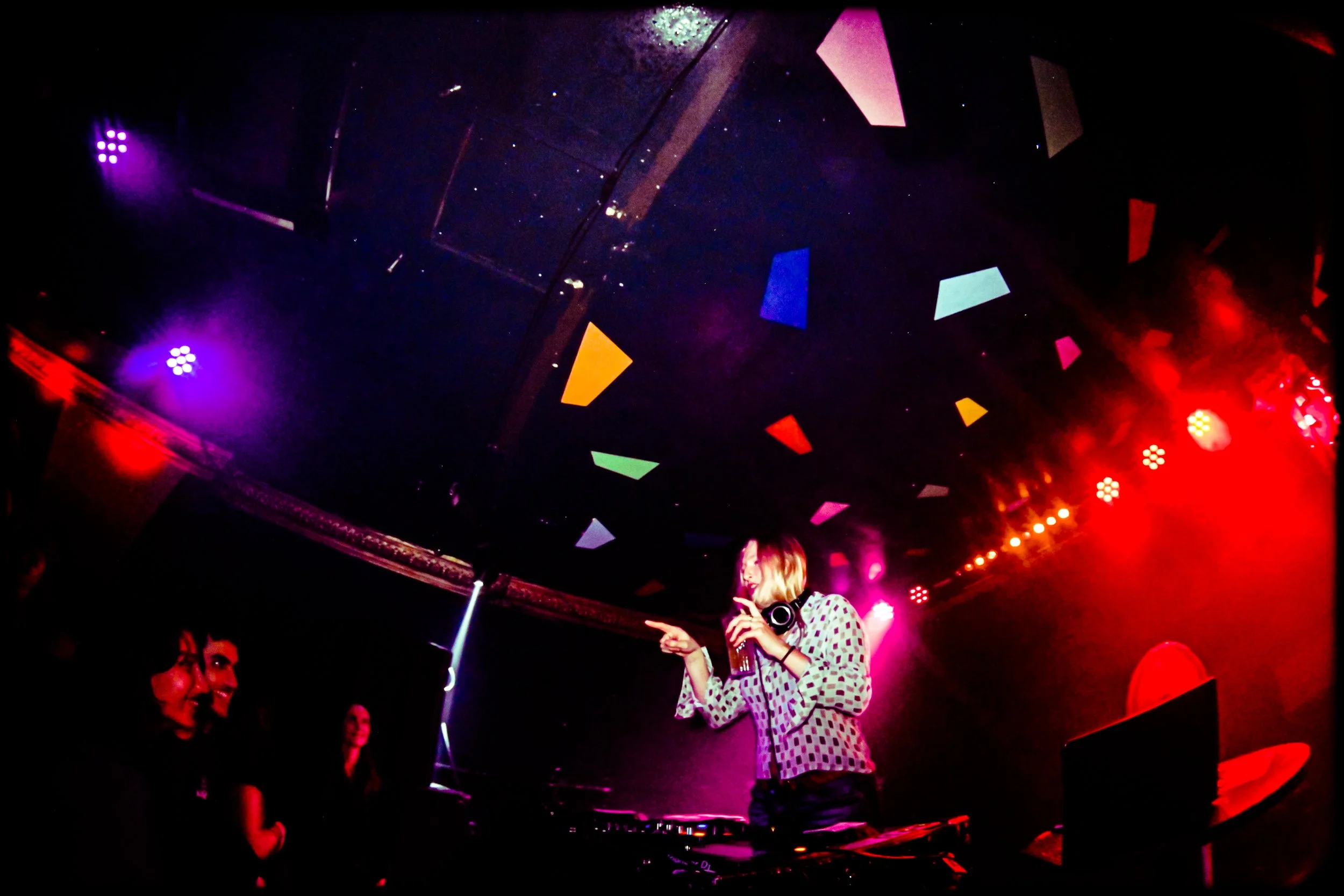

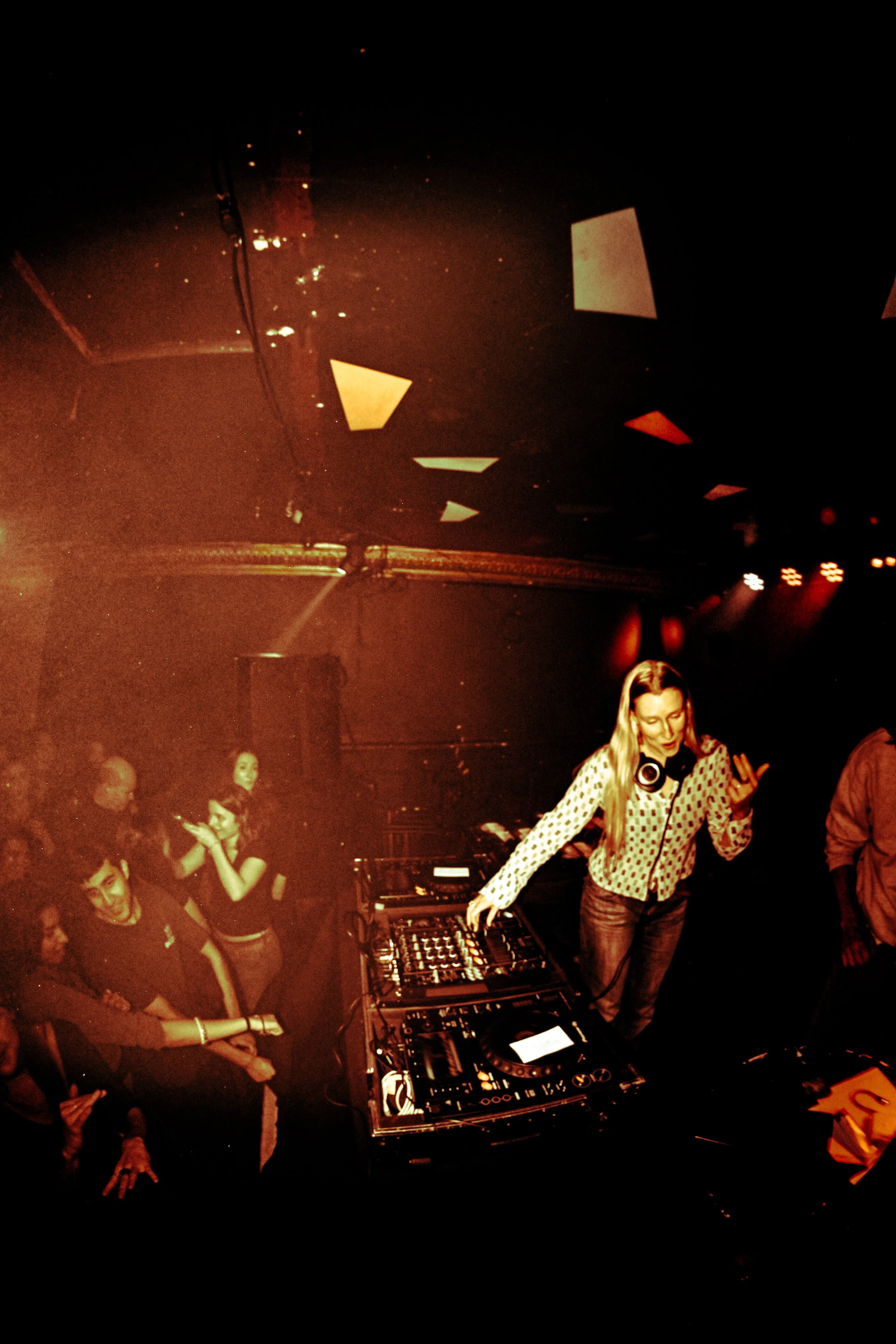


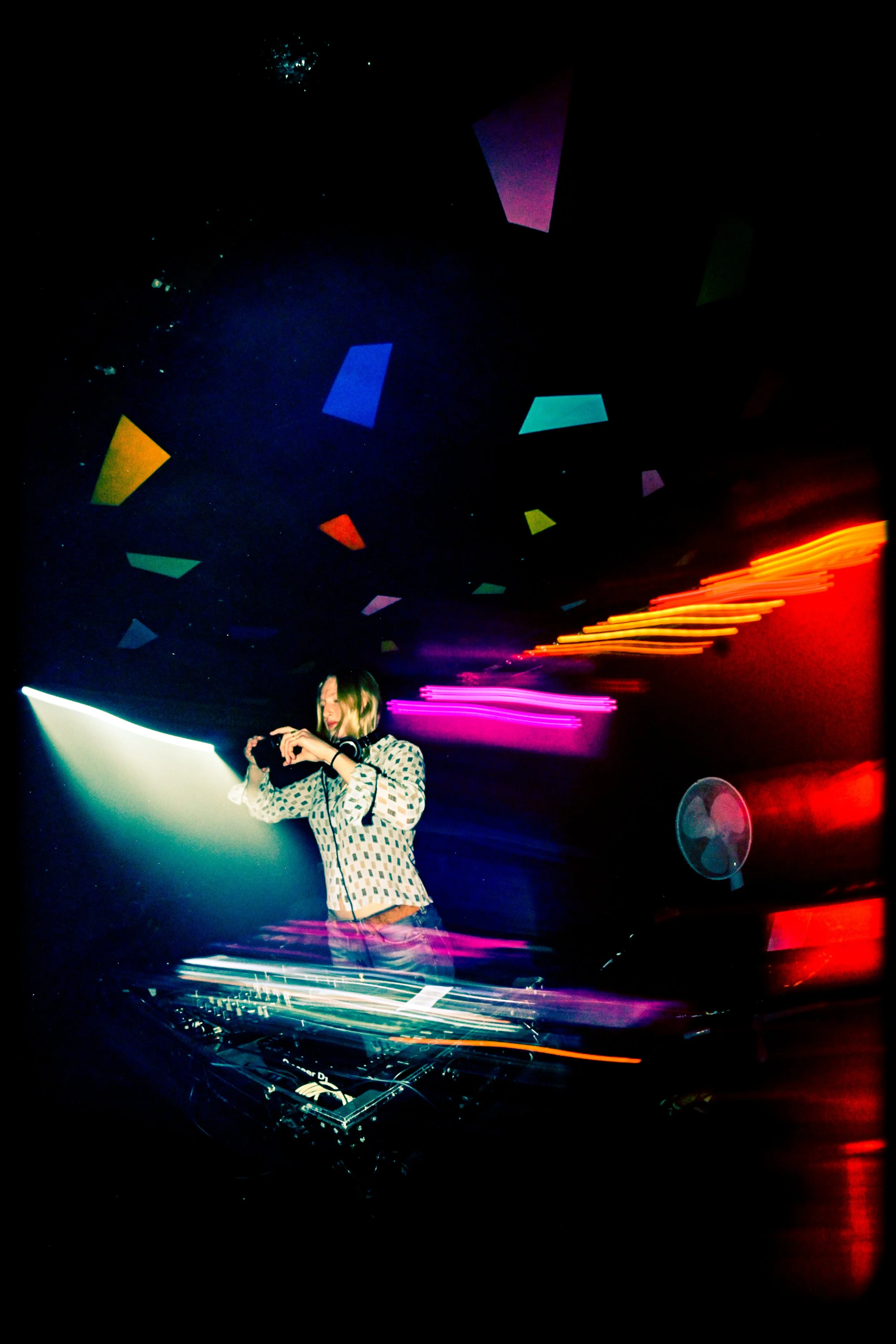


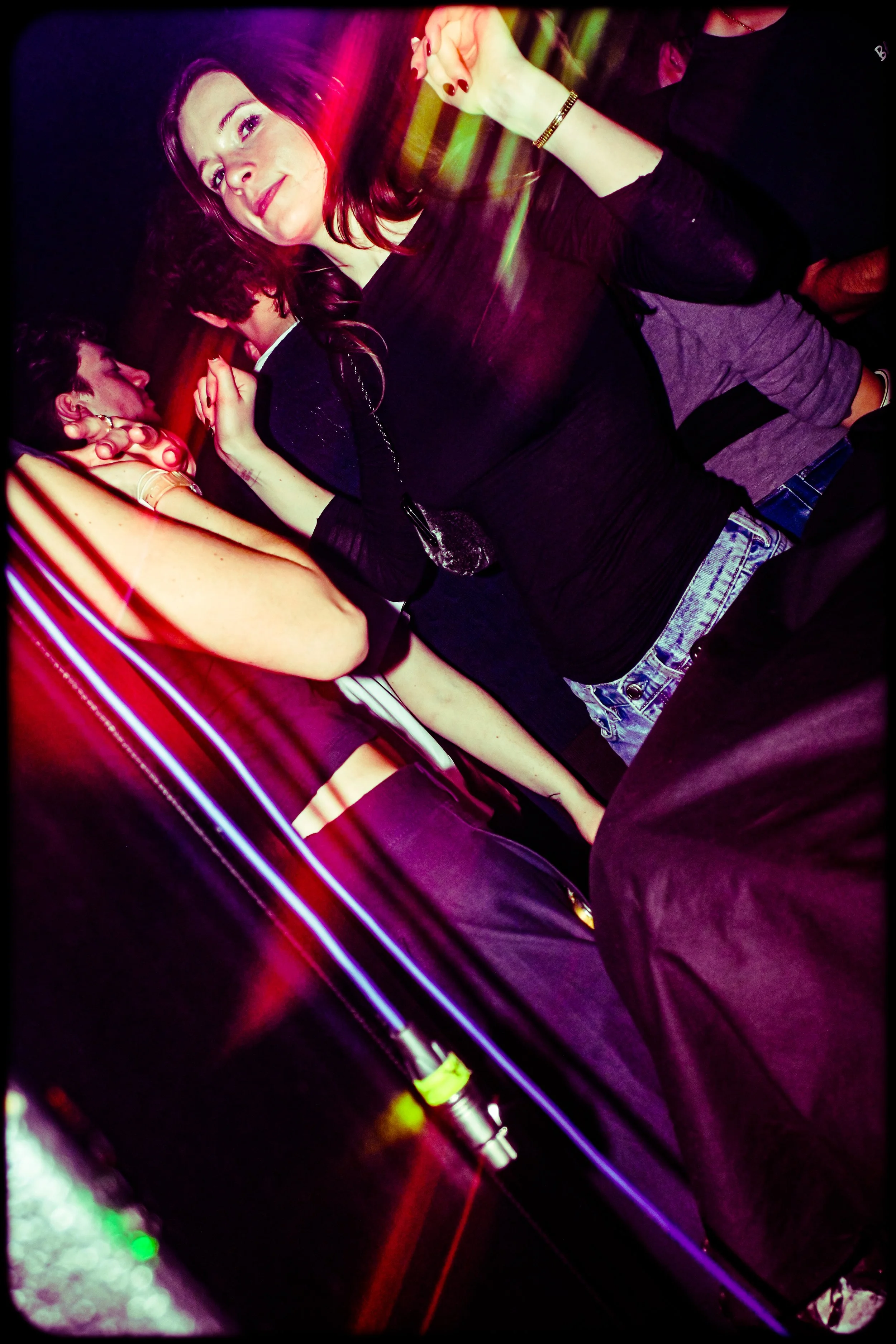
Photos: Syd Gaufo
Creative Director: Maisa Lampinen