
Outer Town Festival 2026: A concoction of folk, country, electronic and punk
Celebrating five years of DIY.
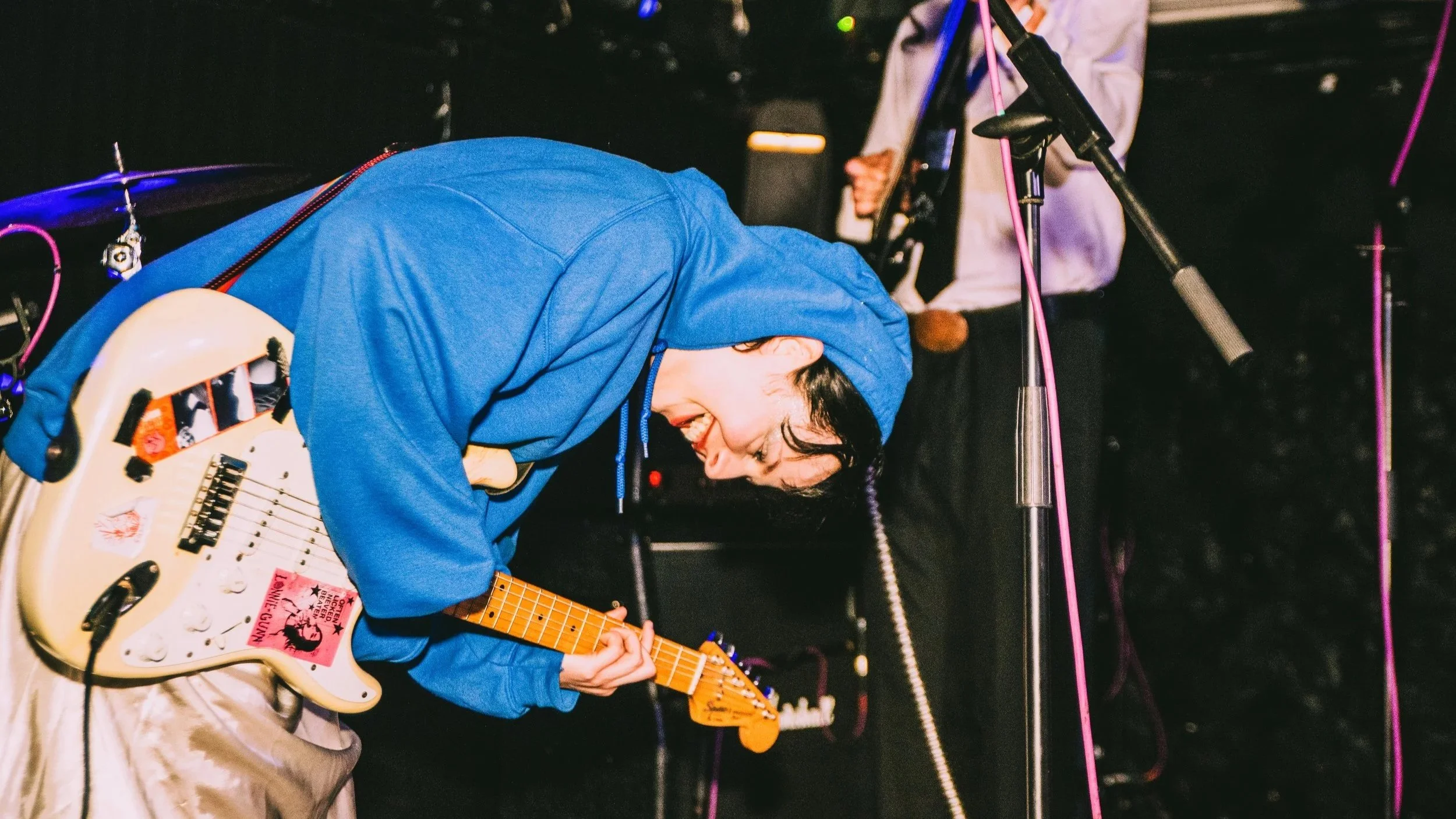
Photo: Ashley Evans
Outer Town Festival celebrated five years of DIY ethos with a sprawling, shape-shifting lineup that thrived on discovery. Moving fluidly between folk, country, soul, punk and experimental post-punk, the festival unfolded less like a schedule and more like a drift; audiences spilling between venues, catching lightning in a bottle, and leaving with a new obsession.
Across the programme, contrasts defined the experience. Honeyglaze delivered a quietly devastating, prism-like performance, while Bucket’s visceral urgency cut through sharp electronics. Goodbye carved out a moment of weightless stillness with their interstellar shoegaze, and hometown favourites Supermarché were met with palpable warmth, their set a celebration of community as much as sound. Closing moments from Do Nothing sealed the night with wiry, rhythmic precision.
More than any single act, Outer Town thrived in the spaces in between; blurring genres, shifting moods and forming unexpected connections. A joyful snapshot of a scene that is messy, exploratory, and unmistakably alive.
Outer Town is one of those festivals that encourages discovery. You go in with a vague plan, but end up drifting between venues, catching fragments of sets, and leaving with a long list of bands you didn’t know you were going to love hours before. Shoutout to the organisers — they’re always on the pulse. When you see their lineups, they always contain bands people will be talking about a few months down the line.
There’s a strong thread of experimental post-punk running through the lineup. We open the festival with Magnolia, a band that conjures up early black midi/Black Country, New Road energy; twitchy and chaotic, with brass-driven eclecticism. It’s a sound that crops up across the day, but rarely feels repetitive.
Elsewhere, we hear Brown Horse live up to their name with a solid country-tinged set. We tumble into Exchange; next on is Bucket, a three-piece from Dublin. There’s a gleeful aggression to it all. Sonically, they have all the drama of Model/Actriz, with more Irish gothic sensibility. The guitarist is strangling the strings, emitting screams. He later turns the wire to himself.
Then comes a turning point. The bodies disperse, a ring forms, tension rises, a cymbal crashes; like rainfall after thunder, the crowd fling themselves into each other. Everything is strobing. People hang suspended in mid-air, and life becomes a photo with flash. Time itself is pocketed.
I lock eyes with a man; familiarity sits heavy on my chest. I’m propelled towards him. Between distortions, I hear a voice: “Is this Shakira?”
Earlier highlights underline the festival’s range. Consider wing!, with only a few singles to their name, edging towards something sleek and expansive: sleazy, smooth electronic with clear hints of bigger things to come. In contrast, The Scuttlers deliver exactly what their name promises: jittery songs packed with tight hooks and mod charm. The queue alone says everything. If they scuttle to your town, give them a look in. They won’t stay small for long.
Across the lineup, there are loads to dig into. Meryl Streek stands out with spoken, distinctly Irish vocals layered over sharp synth lines. Ninush offers something softer and more eclectic; a light pantomime touch with playful lyrics. Ladylike has an Explosions In The Sky-esque post-rock softness, with reverb-soaked guitars and cosmic sonifications taking us on a meandering journey through space, while Modern Woman position low, biting vocals over rhythmic, bluesy instrumentation.
Cocooned within the familiar walls of the Exchange, Goodbye threads the sliding, dreamlike falsetto of their vocalist, Megan Wheeler, into droning space-age soundscapes; their delivery is ethereal and coy, always slightly out of reach. Their intergalactic shoegaze approach creates a natural, stretching stillness in the room. Multi-instrumentalist Sarah Ryan adds further auroral gloom, deftly moving between synth, guitar and lilting harmonies.
Honeyglaze arrive with a quiet confidence. Their set unfolds the same way their light show does: a prism of emotion: polished, immersive, and earnest. There’s an unguarded sincerity to it. Anouska Sokolow’s performance tilts measured and intimate, with lyrics pulled from diary pages. Trembling under unsure love and fractured identity, the sounds simmer and bubble before spilling into a gritty, unrelenting downpour.
Truthpaste offered a completely different pull: folky, understated, with contrapuntal vocals needling through relaxed synths, sax and drum machines. Blending into something fresh. Nearby, TTSSFU lean into a fast-paced, Warpaint-esque palette, mixing dreamy textures with flashes of ‘80s new wave. It’s one of those moments where you wish you could split yourself in three.
Moreish Idols lock into groove-heavy rhythms, echoing guitars (oddly evoking Weird Fishes-era Radiohead), while Adult Leisure tap into a more clean-cut, radio-ready sound: big vocals and catchy hooks.
Hometown heroes Supermarché bring a rough-edged, slightly sleazy math-rock sound, falling somewhere between Arab Strap, Puma Blue and Squid (coincidentally moonlighting as the Outer Town After Party DJs). Their riffs sling and clip, bobbing every head in sight. There was a beautiful self-titled song debut, acting as an ode to the friendship between the members, met with warmth and encouragement from the crowd. The band are loose, chatty, and clearly enjoying it.
Towards the end of the set, a t-shirt is offered out: a flurry of hands raised, and a guy in the front cinched it. A beat passed.
“It’s an extra small.”
There are quieter moments too: The Slow Country feel wholesome and grounded. They dip into an orbit of optimistic, observational songwriting, while Glasshouse Red Spider Mite drift into more reflective territory: diffuse, wispy, spangly tones reminiscent of melodic indie giants Bright Eyes.
Then there’s the pure joy: contrary to their name, No Fun offer a high-energy, 2010s indie throwback. Imagine Kasabian-style vocals and swirling, vortex-like riffs. ELLiS·D also impress, with clear new wave/rockabilly influences worn on their sleeve and confidence growing across their set. BUFFEE bleeps onto the scene with ambient, droning deconstructed club; a welcome sonic switch-up. They forge a guttural soundscape — disjointed and entrancing.
As the moon rears its head, Do Nothing close things out with a set that lands somewhere near Yard Act territory, but less confrontational: sharp, rhythmic. The crowd are entirely immersed in the push and pull of their sound: Chris Bailey croons into the mic about hyper-personal topics, delivering a spidery, jerky performance. A self-defined ‘band ready to kick down every door in front of them’, they ironically closed doors up. Old Market was at capacity, with hopeful punters lining the street.
Outer Town doesn’t feel like it’s about any one act: there’s a synergy. It’s the kind of festival where you don’t seek out specific connections, you stumble into them. And that’s exactly what makes the indie scene work. From abstract synth experiments (ashnymph) to classic singer-songwriter moments (Dermot Henry), it’s a snapshot of a scene that’s creative, messy, diverse and very much alive.