Fontaines D.C.’s fifth album comes as a fresh reinvention of an already legendary band.
★★★★☆
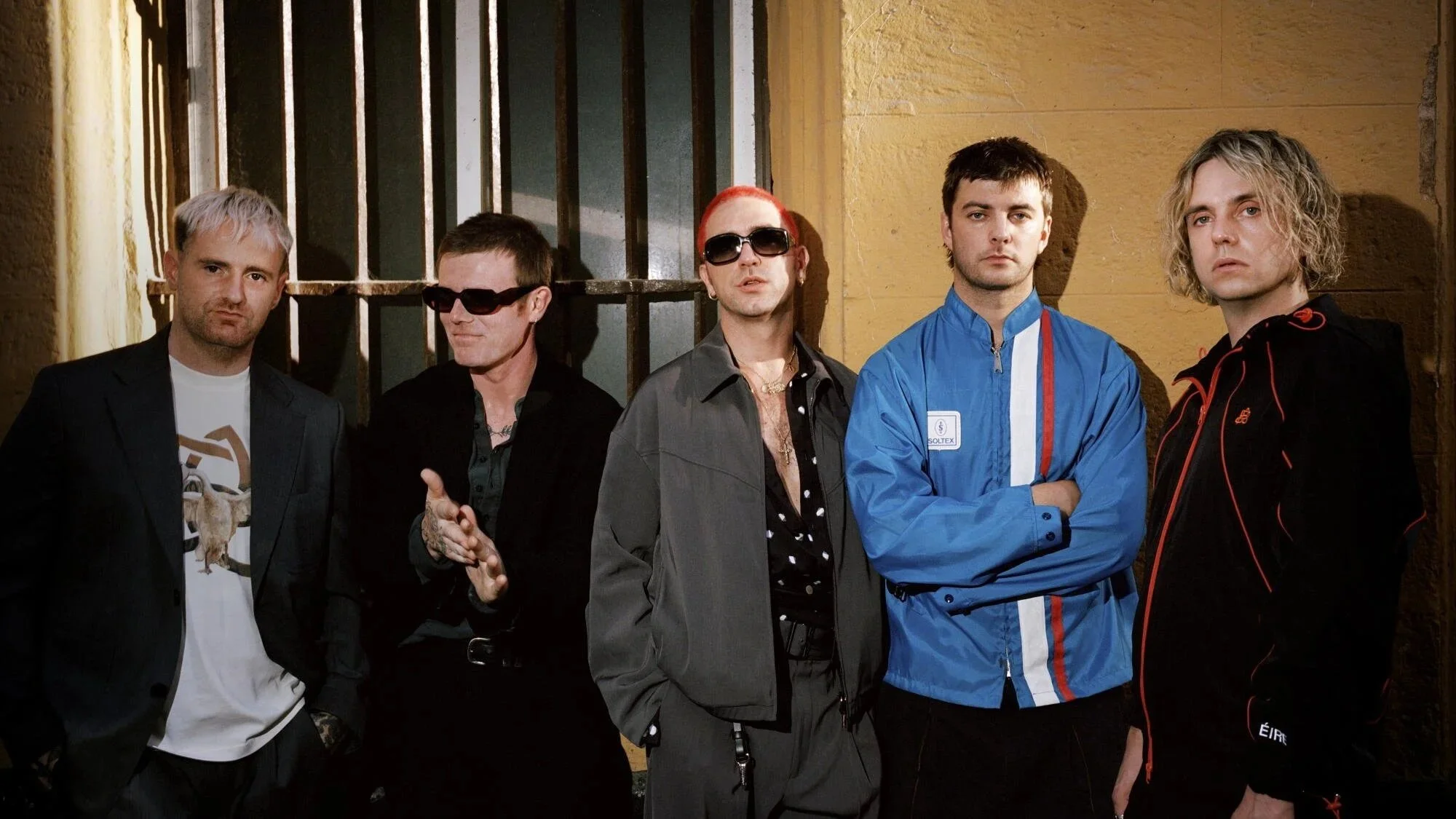
Photo: Ewen Spencer
Present-day fans are often far too quick to criticise artists for abandoning the styles that first attracted them to mainstream appeal, yet artistic stagnation can pose a far greater threat to reputation than reinvention. Following the success of Romance, Fontaines D.C. faced a similar dilemma: reproduce the formula that gained them international recognition or venture into a sound far more visionary.
Dopamine Chamber explores the unfamiliar, exchanging the band’s guitar-driven arrangements for a colder, electronically saturated soundscape. Arriving in the wake of their longtime manager Trevor Dietz’s passing, the record carries added emotional weight, exploring themes of emotional detachment and the desire for gratification.
Opener Six Shot Morning establishes this new identity with remarkable confidence. Classical strings pave the song’s gradual build to distorted synths and overlapping vocals before Grian Chatten’s delivery of “melancholy hearts in a motion film” sees the track’s cinematic climax hide a far more dystopian connotation. “Silicon Valley took a photograph” captures Chatten, framing our society as lost as youth becomes increasingly consumed by comparisons to manufactured realities, encouraging a sort of numbness from reality itself.
Marianne pushes this narrative into more intimate territory with looping keys and a weighty synth bass misleading the track as simultaneously seductive and suffocating. Chatten’s Irish inflexion remains central to its appeal, inviting one to ‘disappear’ with him to a world far from modern life’s pressures. Temporary pleasure becomes a means of avoiding reality rather than confronting it as this escapism is revealed as another form of entrapment.
On Mimesis, the band sharpen the narrative through a hypnotic, New Order-esque bassline. Its title, derived from the Greek concept of imitation, reflects an existence reduced to repetition and performative behaviour. “Everybody’s depressed, we’re running on a wheel” becomes a simple synopsis of the exhaustion of life itself as the track’s repetitive production ultimately embodies the numbness Chatten describes.
The record briefly reconnects with the band’s familiar guitar-heavy origin on Demolition and Tongue. The former mixes grunge-inspired riffs with a melodic rhythm, recalling the darker sides of The Cure. Both introduce a distorted vocal delivery, paving the anxious warning that comes with the emotional wreckage, bitterness, and inevitability of a collapsing relationship.
The album’s second half becomes increasingly subdued. Where Is Gone? featuring Rosalía is its most ambitious departure, pairing Chatten’s mournful delivery with Rosalía’s delicate vocals over an orchestral arrangement. Their contrasting voices create a cinematic scale of togetherness in their familiarity with losing one’s connection to their cultural identity.
Elsewhere, Japan comes close as the sibling to Romance’s Favourite. Similar in their prominent acoustic backing, Japan sees the guitar tones mostly stripped of their warmth as Chatten continually questions the ending of a relationship: “Why’d you go and make it real?”
Ultimately, Dopamine Chamber is a bold continuation of Fontaines D.C.’s evolution. Despite the sluggish arrangement and repetitive songwriting on One Man and Intimate, the best moments demonstrate how effectively the band can settle into a new sound. Fontaines D.C. deserve credit for resisting the temptation to recreate Romance. In a disconnected world increasingly designed to keep us searching for the next hit of gratification, perhaps the record’s greatest achievement is making that pursuit sound so unsettling.
Dopamine Chamber is out now via XL Recordings.