Jalen Ngonda: “The second album is an output of what I took in from the world around me”
The London-based musician is breathing life into the soul genre.
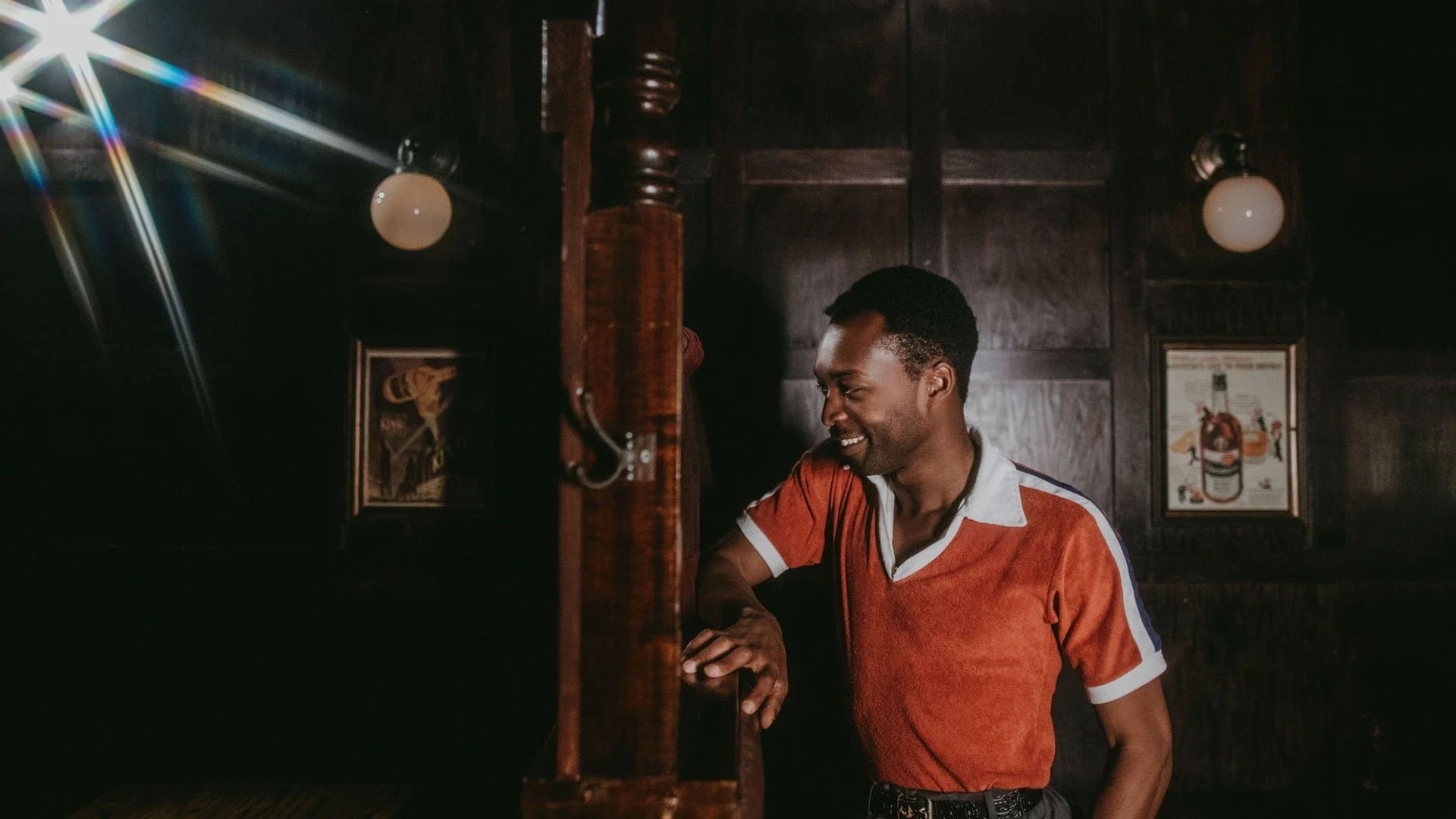
Photo: Rosie Cohe
It’s been three years since Jalen Ngonda shook up the musical world with his debut album, Come Around and Love Me, and 2026 sees him return with his second offering, Doctrine of Love. Having already toured this year, the musician is set to take his new material on an Autumn tour, and sat down to talk to us before heading out on his Spring tour.
The first thing I wanted to talk about was your earliest memory of music. Did you have a musical family? Is there a certain memory that is really prominent?
Well, I don’t necessarily have a musical family. My family are sort of, I guess, ‘average’. My mum’s a teacher and my dad worked at a department store selling watches and stuff, or, you know, one of those people that stand outside and be like ‘would you like to try this perfume?’. They had a contemporary music collection of the ‘90s and 2000s. They listened to loads of TLC, Tupac, Black Eyed Peas and OutKast.
They weren’t necessarily like big soul heads or something. They just kind of see music as like a service of Motown. That’s just nostalgic for them. They see it as like ‘Oh yeah, that reminds me of when I was a kid’.
I know that you have different music taste, but did any of that music influence the music you make today?
To a certain degree, but not enough to want to be a musician. It probably influenced me to pick up – I don’t know… I didn’t enjoy the music of the day, whenever my mum was in the car, like playing music from the charts. I just never enjoyed any of it. I appreciate it in retrospect. I really got into music as soon as I listened to old music, like [The] Temptations and The Supremes, to Marvin Gaye and all that.
How did you discover that by yourself?
I was watching TV and there was a commercial that came on that was trying to sell me a Temptations mini-series: ‘now available on DVD and Blu-ray’. That really started everything. I just saw that on a commercial, and it looked so… – I loved the music that was coming out of the TV and the way it looked. That’s what really started it. I asked my mother and father, like, ‘Can I please get like a Temptations CD?’, and they would laugh and be like, ‘What? Okay’, and then they got me one. That’s what really started my journey to songwriting and singing and playing guitar and everything.
When you moved to Liverpool, how important was that for you and your career?
I moved to Liverpool as a student and not necessarily as like, ‘Oh, this is a sort of leeway for a music career’. I wanted to have a career in music – I didn’t know where the destination would be.
I was in Liverpool doing a one-year course. At first, I thought, ‘I’ll go to Liverpool for a year, move back to the States and then continue my career’. There were certain events that happened and circumstances that led me to ultimately decide to stay in the UK permanently through a series of visas and stuff.
But yeah, I just kind of went with the flow with things. It’s all down to the people you meet, who you surround yourself with, and you build friendships and close friendships at that. It all just led me to staying in the UK.
What brought you to London?
Well, London is, you know, it’s… – I wanted to take my music more serious. I was doing the same old thing in Liverpool after playing the same gig. There’s not really much going on, I mean, with what I wanted to achieve.
I wanted to feel challenged again. I wouldn’t have been able to move to London on my own. I was lucky enough that some friends of mine also wanted to move to London. It was kind of a joint effort. If it was just me that wanted to move and all of the rest of my friends wanted to stay in Liverpool, I’d probably still be in Liverpool.
How is the music scene here compared to the US?
It’s not much, to be honest. I don’t see a massive difference. I mean, New York and London are so parallel. People sound different, like in terms of the accent. The whole vibe of there’s a gig on a Wednesday night at this hipster bar. You see that in Williamsburg, as you would see it in Dalston.
To compare the scene in London to DC is quite vastly different because DC is a much smaller city and very local. Obviously, you have people that come all the way around the world, but mainly around the US, that go to move to DC for college and they could be artists and they get into bands and stuff and go play at local popular areas.
When I was living in Maryland, in the bit where I’m very close to DC, I was just a resident. I never really went far out of my neighbourhood, so I didn’t really experience the whole DC. I did to a certain extent when I was 19, but I experienced a lot more over here. I just went to the park and went to church on Sunday. I didn’t get out there, you know?
With your debut album, have you learned anything from that process that you’ve brought onto the new album?
I’ve learned how to save my voice and take care of my voice more. That’s more practical. Creatively, I’m continuously developing all the time through listening to music and life experiences, conversations, or just whatever happens in the world around me. The second album is an output of what I took in from the world around me.
Have you found yourself becoming more collaborative on this album?
No, it’s just as collaborative as the first one. I wrote the first album with Michael Buckley and Vince Chiarito. Mike did the strings and horn arrangements and Vince did the mixing. I co-wrote all the songs and wrote one song on my own, as I did on the first album, so the formula hasn’t changed.
Have your inspirations changed at all on this album?
Yeah, I’ve discovered a lot of stuff since the first album. I think we all hear something new every week. There’s been some bands and artists that I’ve seen live. In all honesty, I just listened to the same old, same era of like sixties rock and soul and stuff, like in a very nerdy way. I just don’t really go outside of it.
Who are some of your favourite artists at the moment?
Burt Bacharach and Brian Wilson to the Motown catalogue, just all that stuff – Stax Records. I’ve been listening to some Pink Floyd lately, and some Polish jazz from the late sixties. I’ve oddly been listening to Star Treatment, which is an Arctic Monkeys song.
I feel like Arctic Monkeys is quite a surprising one. Are there any other artists that would surprise someone to hear you listen to?
It’s like a country artist, like Hank Williams or something. Like Les Paul or Mary Ford. People get surprised when I say [The] Beach Boys because in America it’s like – and I really don’t mean to make it awkward – a black guy listening to The Beach Boys is not really an everyday thing over in the States, so people get shocked when they hear that.
Did the first single from your second album, Doctrine of Love, feel like the natural lead single?
Oh, yeah. I mean, when I wrote the song, I didn’t think ‘this is going to be a single’. It was part of the whole writing for the album. It was a song amongst many other songs that were like ‘this is the bag of songs we got for the new album’. Once we recorded everything, it came down to the label going like ‘this would be a good single and that would be a good single’. I’m indifferent; I don’t have a strong idea of ‘this has got to be the driving single’.
Is there an underlying theme on the album?
It’s just stories; it’s just like romance; it’s just rhymes. Just like, you know, ‘You’re fine, I’ll make you mine’. There’s no deep meaning. It’s reflective of what I listen to all the time. It’s topics of romance, heartbreak, newfound love, confusion, unrequited; that stuff we all write about and listen to.
How are you planning to translate the album into a live show?
They develop over time, like me and myself in the band, we get it tight so we can play the actual song. It could be during rehearsal or soundcheck, where any of us could do something really cool and be like ‘oh, that’s really nice, try that when we play it, do that’. A live rendition develops over time.
When I first started playing Come Around and Love Me, it was playing very close to the record because it’s a festival and someone says ‘You’ve got five minutes’ and you’re like ‘Oh, well, shit, I need to expand the solo and then that becomes part of that because it goes down well’.
Do you have a favourite song on the album? Is there one you’re most excited for people to hear?
I really like Taking Out The Picture. That’s the last song on the album, that was like mid-tempo. I like the lyrics in that one and the chords. I like Hanging On The Shelf and I Can’t Ever Leave You. I mean, I love them all. I love Doctrine of Love, but I thought it was the weakest of them all, but everyone’s like, ‘No, this is the strongest one’. They’re all my babies, it’s like choosing my favourite child.
Is there an achievement you’re most proud of?
Practical things. I haven’t showcased it, but I’m getting a lot better at producing. I do a lot of songwriting sessions and being able to work the knobs on the circuit, certain drum sounds, I’m very proud of myself for that. I don’t really have a sense of pride with the sort of commercial activity that’s been going on in the past few years; I’m just proud that I’m alive doing it.
How did it feel getting a physical copy of your debut album?
It was pretty cool. It felt nice, I thought it looked cool. It took a while to get into the cover art, at first I was like, ‘What the hell is this?’, but it grew on me over time. You have a vision of what your album’s gonna look like and you get something else and you’re like, ‘What the hell?’.
To be honest, it was around COVID and I remember the day I got it. I was living in a cold house and I was just like, ‘Oh, thank you, let’s put that over there. I need to get some groceries’. It was more special to show my parents when I took it home and said, ‘Here it is’ and they were like, ‘Oh, my god’. That was more of a moment for me.
Lastly, some quickfire questions: if you could step into an artist’s shoes for a day, who would it be?
Probably Jimi Hendrix just to be like, ‘Damn, I can play guitar that good’. It’d be fun to play like him.
If you could play any venue in the world, which would you choose?
Apollo Theatre in New York. All the greats have been there. That, or the Sphere in Las Vegas. That would be so fun to play.
Lastly, if you had to cover a song, what would it be?
Busking was what I did all the time, and I did function work. My favourite song to cover is Walk on By [by Dionne Warwick]. What else? Maybe Dazed and Confused by Led Zeppelin. I would love to do a version of that.
Doctrine of Love is out now via Daptone Records.
You can also find this interview in print. Order Issue 2 of The Indie Scene Magazine here.