“The best art ruffles feathers”: LEMONSUCKR on their latest EP ‘Life is a Heist’
Frontman Guy Ferris and guitarist Ollie Thomas from the emerging dance-punk outfit sit down to talk about their new EP, energetic gigs, and getting personal.
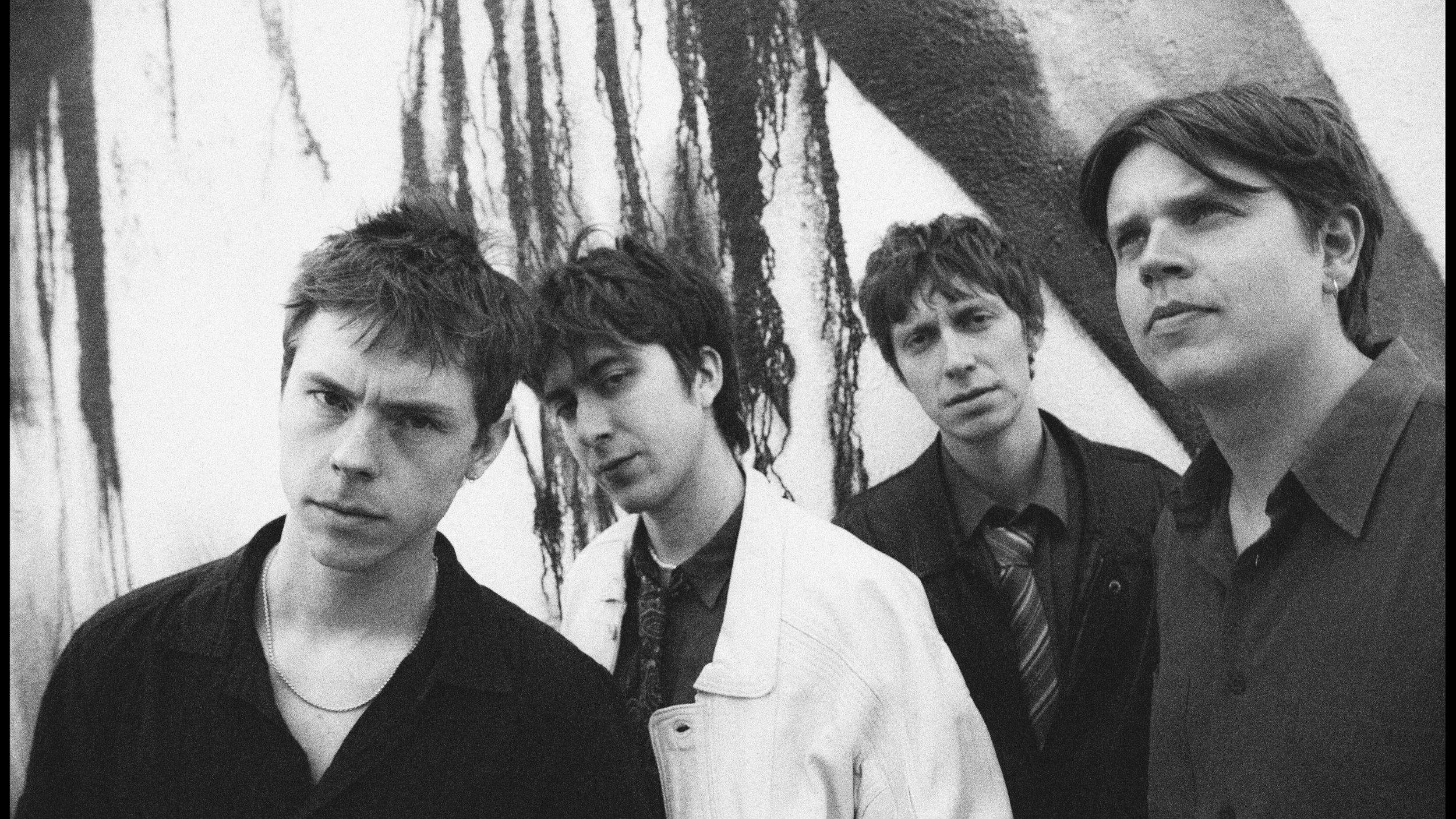
Photo: Jude Watkinson
When I saw LEMONSUCKR play at the 1865 in Southampton, as part of the city’s annual Wanderlust Festival back in May, I knew I was witnessing a band at the start of a very promising career. It was like catching John and Paul in their Quireboys days, or witnessing the very first spark that triggered the Big Bang. The four-piece’s nuclear fission of deeply personal lyrics with dance floor-ready club beats (think CHALK) and 21st-century punk riffs (IDLES, Fat Dog) made for an electrifying set, the only downside of which was that it ended far too soon.
Back in June of this year, the lads from Brighton released an EP, their second, Life is a Heist. I took the time to ask frontman Guy Ferris and guitarist Ollie Thomas about what touring the EP’s been like, how it differs to their debut –2025’s H.E.A.T. – and the strange Wikipedia deep-dives behind their music.
Life is a Heist has been out for around a month now. What’s the reception been like?
Ollie: Surprisingly positive, especially on Stain. That seems to be doing the numbers, baby. [laughs]. Really good. It’s been very self-affirming to see a lot of people coming to the shows, singing the lyrics to the new ones. It was pulled together out of nowhere, very quickly and shipped off. So yeah, success.
Guy: It was pretty much all self-produced, so it was a little bit daunting for us to put it out. We were awaiting some honest feedback, and everyone’s been very, very nice about it. We’ve been really lucky to be meeting people on the road who are enjoying it. I think the next record we do, we’ll probably end up going into a studio. But it was so fun just making the record ourselves.
Ollie: It was mainly just demos. And we were just like, “Well these are not far off — with a little bit of drum re-recording and a little bit of smoothing out the rougher edges, we probably could get away with releasing them.” So that’s what we did. Saved a bit of money as well.
Guy: Getting away with it is kind of the indicator for how little budget we had. It was done in our bedrooms, basically. It’s cool that it’s been received so well. We’ve been playlisted quite a bit, with Stain actually. Getting radio plays out in the US. And we’ve had the opportunity to play some shows in Europe off the back of it, which is nice, like in the Netherlands and stuff. We didn’t expect any of that, or it to take off like it did.
When was the first track written on the EP?
Ollie: Rugrat is the slight exception. That was one that was more recorded in the studio. That was a version that was made three years ago. We kind of mashed three versions together to get what’s come out now. But the other four tracks were demoed and written within the past year, year and a half. Apart from Rugrat, it’s relatively new. We went to Brighton Electric to re-do the drums and a little bit of bass.
Is there a track on the EP you’re proudest of, or enjoy playing most live?
Ollie: They have different life forms to me, in terms of what I think of them as a live song, and what I think of them as a recorded song. As a recorded song, I really love Stain, but as a live song, it’s a pain in the arse to play so it gives me the heebie-jeebies. But I still like it. Rugrat always meant quite a lot to us, because it’s the first time we made a song that we thought sounded a bit more like us, after years of digging to try and find what makes us stick out.
Guy: I actually really love Life is a Heist as a track. It’s not the sort of song that will be received straight away, I don’t think. It’s one you’ve got to sit with more, or have more of a niche taste to enjoy. It’s not an immediate song. It’s not one that would be played on the radio, or it’s a song you’d skip if you don’t sit with it. But I just love how the song flows from start to finish. It feels like it’s constantly building. I don’t know, I feel it was arranged well. I was pretty pleased with the story of the song. It was cool. Felt like it was composed for a Guy Ritchie film. That wasn’t intentional, it just ended up sounding like that.
How was making this album compared to making your previous EP?
Ollie: The H.E.A.T. EP was much more of a traditional [process]. We went in with a guy called Johnny Arthur and a lovely girl called Fifi; her artist name is Dewey. We went down to Johnny’s studio in Kent for a week and just banged them out. And then there was the usual mixing process. But this EP was probably 80% created right at this computer behind me. With me making most of the instrumentals, and then Guy singing over them. It was just more accidental. 80% of the tracks were there, we just had to re-record the drums, get a few vocal takes out, clean up a few things on the production front, and then send them off to be mixed. It’s not as typical as the last one.
Guy: I felt like, with H.E.A.T., we had some songs that we enjoyed playing live and that was kind of the main thing. It was like, here are some songs that we think people will wanna hear based off what we enjoy playing, or what we felt got a good reaction from the crowd. I guess going into H.E.A.T., we already kind of had an idea of what it would be. With Life is a Heist, we hadn’t played any of these songs yet. Rugrat was one that we'd played, because we had that one a while. Before Stain or Grandaddy was released, they hadn’t been played live. It was a bit more of a shot in the dark, this time. And also, we put a bit more thought into the listeners on this EP, we spent a bit more time constructing it.
Ollie: Personally, I always think, forget the listeners. It’s not for them, it’s for us! And hopefully people will like it if we make what we like.
Is there a particular throughline on this EP?
Ollie: The throughline is that it’s us. [laughs]. This most recent EP is on the varied side. It’s not going from opera to blues, but it’s a more varied track list. There’s some dancier ones, some slower ones, some heavier ones. The electronic-y guitar stuff is a bit of a throughline. But because they weren’t made as a full body of work – we had loads of songs and then sat down to pick which would be on the EP – those five came out. At first, we were like, “Is that too sporadic?” But we went through it and thought, “It works, so let’s roll with it.” I hate the idea of making your album or EP like a showcase of ‘look what we can do’, but I guess [this EP] does cover a few bases.
Guy: We just picked the songs that we thought were right. Not to sound too wanky or self-indulgent, but I feel like a lot of the lyrical aspects of the EP are more personal. H.E.A.T., we had a bit more fun with. This one dived a little bit more into slightly uncomfortable topics of lyricism.
I’m glad you mentioned that! When you’re writing music, how much of it comes from within? Stain sounds very personal.
Guy: Stain is a very personal one for me. I was actually quite scared to put that song out. I’ve still got a good relationship with my parents, but straight off the bat, the first lyrics are almost a call-out. I guess as you get older, you realise that everyone's human. That for me was just an attempt at being more honest with some writing. I don’t know how well received it was from some of my family members or their friends. But that’s besides the point. Ollie’s always said to me that the best art will ruffle some feathers. If people have an issue with it, it’s because it’s struck a cord personally.
Ollie: I think that’s why it’s my favourite, because it’s the most honest. For me, it’s the most exciting when it’s vulnerable and raw. There’s no bullshit, really.
Guy: There’s a lot of things I wanted to say for a long time to people that I held back, maybe because it’s been a little bit painful or a bit difficult. Even Granddaddy is basically just a piss-take at myself, and us as friends when we were younger and hanging out as idiots, really. It’s about how ridiculous we were. It felt difficult sharing those parts of myself. It’s very exposing. I’ve tucked that side away from me for a while, but we really endorsed it this time. And I’m glad for it.
What are your biggest influences in making music, musical or not?
Guy: It’s more difficult writing about personal things or life experiences, because the reality of life is that it’s pretty boring and mundane. The realism is that people don’t live these crazy lives, but you do get little snippets of things that people resonate with, or I felt had some importance to me. I also find it a lot of fun having a sense of play and messing about a little bit. We’ve got this song that we haven’t recorded yet, called Boudicca, which is literally about Queen Boudicca of the Iceni tribe. It’s a historical, factual piece, but the little game I played with myself was, let’s try and write a song about this queen during the Roman Empire, but try and make it feel like she’s a modern person, or relatable to the modern listener. Like I'm just talking about someone I know. That was a lot of fun, because that was a little game for myself.
I often find myself making note of these weird folklore and tales, or historical things. And I think that would be fun to try and play that game again. One I haven’t done yet is – I go on these deep dives of Wikipedia – one was about this ghost in Mayfair, on Berkeley Square. There’s this house that is supposedly haunted by a, I don’t know what you’d call it, like a squid-man? Like a squid-man ghost. Like a Cthulhu looking ghost, a cuttlefish-looking dude. Multiple people have said that they’ve seen this squid-man in this house in Berkeley Square, in the window or if they’ve stayed there. Weirdly, my brain is like “Yeah, let’s write a song about that.” I don’t know, I’m almost drawn to macabre imagery. Dead Disco was a lot of fun to write, purely because it just felt like I was writing a story.
Ollie: I was just thinking, it’s probably half an unhealthy relationship with valuing my self worth on how good the music is I'm making at the time. You’re only as good as the last song you made or whatever. I haven’t got much to give to general society, but I am alright at music. There’s an inherent need to create music, in a weird way.
Guy: I find if we try and emulate the sound of something current, by the time the product is finished, the sound of what that was isn’t interesting to us anymore. Sometimes the best forms of inspiration aren’t what’s currently around.
Ollie: I make music that I want to hear. Sometimes I feel like I make the same thing all the time. We kind of had a bit of a formula; I don’t know if that’s the right way to say it because that can sound negative, like it’s ‘formulaic’. But at the moment, we have a bit of a guideline of what makes us us. And I quite enjoy pushing them, and seeing what can we create within that, while somehow making it a bit newer.
Guy: We actually wrote down a bit of a formula on how we write songs, and took it into meetings with major labels. And no one fucking bought what we were trying to sell that day. They were like, who are these kids bringing fucking notepads with a fucking manifesto in? [laughs].
Interesting that you mentioned you see music in terms of both recording and touring separately. What do you think of touring?
Guy: I love it.
Ollie: I think at our level, we’re getting paid near to nothing, and turning up and just drinking quite a bit. It’s good fun. We love it when a show’s going right. When the show goes right, it’s like fucking yes, it’s worth not getting paid for. And then some nights, it’s like we’ve travelled six hours, played to two people. Though that’s happening less these days.
Guy: I feel like as LEMONSUCKR, we’ve yet to have a really good tour set out for us. We’ve done lots of shows this year, I wouldn’t say we’ve ‘toured’ as such. We haven’t done a thirty day stint in a row, like twenty shows in thirty days, which we’re all dying to do. We’ve been offered support tours. I guess where we’re at at the moment, we couldn’t go out and headline a tour of the size we’d want to. We’d rather wait to do that than go on a support tour where we go on tour with a band that’s a bit bigger than us.
Ollie: We’re wary of the fact we don’t have loads of money, so we can’t put ourselves under.
Guy: The only way to be chosen on these support tours, though, is if either you know the band or if the band knows of you and like what you’re doing. We’re not at a point yet where we’ve been discovered. We’re still in the discovery phase.
Ollie: Well we might have been discovered, but they all think we’re really uncool. [laughs].
At Wanderlust, you were in the crowd, at the barrier, playing over the audience. At one point, you had a cowbell in my ear.
Ollie: Sorry.
Where do you get the energy?
Ollie: Before the show, we all – at least me, Guy and Oscar, because we’re obviously the three being idiots at the front – we kind of get into the zone. We know we’re going to give it absolutely everything. Maybe we’re over-compensating, but at this point it feels right to really just give in. These songs mean a lot to us, so it’s channelling our physical energy into the passion for the actual music. And it comes out in all sorts of stupid dance moves.
Guy: It’s been a slow process learning it, but the more that we interact with people – the closer we are to breaking down the barrier between being onstage and the crowd – the better the show gets every time. We’re still shocking ourselves with what we can do. I never expected to see Ollie climbing anything. It’s wicked when we’re onstage and I’ll see him halfway up the fucking wall somewhere. Getting into the crowd for the first time was pretty scary. I think the first few times I ever did that, I kind of got shoved in by one of the other boys. Probably Oscar, to be honest, he always gives me a little shove. You don’t realise what you’ve got in you until you’re put on the spot.
Ollie: As long as you’re not hurting anyone, which most of the time we’re not. You kind of fear going a bit too crazy; am I gonna look like a twonk? But then you do it. I feel like they make the gig more memorable, and also more fun for us, being idiots, jumping around. If you just go up there, stare at your feet for ages — and there’s nothing wrong with that. There’s amazing bands I’ve seen who have stayed still as statues. But for us, we’re energetic so we might as well portray that in the actual performance. Very weird if we were all playing our music just dead still.
Guy: Following on from your point there, Ollie, I saw Westside Cowboy for the first time this year. And those guys don’t jump into the audience. They stand in their own spot, each of them, onstage from the start of the gig until the last song where they all come round the front of the microphone. But throughout 99% of the show, they’re all in the same spot. It was still one of the most enjoyable times I’ve seen anyone play, because you could really tell that they meant it and enjoyed playing with eachother. You could see them living. That’s what we want to deliver, but we’re just doing it in our own way. And if that means having a little bit of a dance with everyone else, or Oscar rolling about - Oscar loves to roll about on the floor, with his guitar. And Ollie loves to climb stuff and hand people stuff in the audience. It’s just things we’ve found we enjoy doing.
What other artists would you love to collaborate with, or play with live?
Ollie: Chappell Roan.
I’d pay good money to see that!
Ollie: Record-wise, who would be good? Depends on what the vibe was. I guess working with some absolutely incredible – not that Guy isn’t, of course – incredible singer would be pretty cool.
Guy: It would be cool to work with someone like A. G. Cook, trying to make LEMONSUCKR a little more dancey, see how that turns out. But also it’d be great to work with a female vocalist, too. It would be nice to sing with someone else. A lot of the backing vocals are in unison with me shouting. [laughs]. There’s not much harmony; there’s a little bit here and there. But it would be nice having someone onstage with me. Or record something where it’s me and another singer.
Ollie: I guess working with like – this is such a classic fantasy for most musicians in our sphere – but someone like Trent Reznor. He’s levels above where we are, but just being able to learn off him, that would be the main thing. Or if we had a song that we thought was cool, seeing how he could make it even better. That would be a dream.
Have you given any thought to a full LP?
Ollie: We’re always thinking. But we keep our lips sealed. Keep your eyes peeled.
Guy: We’ve got a lot of material ready to record. We’re just figuring out the logistics.
What would be the ultimate venue to play?
Ollie: Realistic, or dreamland? Like, I’m gonna play on the Eiffel Tower, that kind of stuff? Guy, you go first, I’m thinking.
Guy: I was having a conversation with someone today about gigs that are in spaces that aren’t predominantly venues. Like, I love seeing clips on socials of Lip Critic, for example, who’ve just done a show in a boxing ring. And I thought that looked awesome. People were going absolutely wild. We were chatting about another band called YHWH Nailgun, and they played a show in London, in a swimming pool. That was awesome. I really want to try a gig somewhere out of the box, but figuring out where that is and how we’re gonna get away with it is the bigger question.
Ollie: Just like, playing some kind of sporting event, like playing while a boxing match is going on. [laughs]. Or like, you know that opening sequence in Casino Royale? Is it a snake fight, or something? What is it? Playing something like that.
Guy: Or the Red Bull Soapbox race. We’ll be the ambassadors there. I don’t know, I can’t think of exactly where, but a place that’s not a venue would be a dream for me. Making that happen is a lot harder than just setting up a show.