Kes: “I see Calypso like a tree — understanding the roots, nurturing the shoots, witnessing the fruits.”
Kees Dieffenthaller looks back on Kes’ musical roots and the legacy of Calypso and Soca.
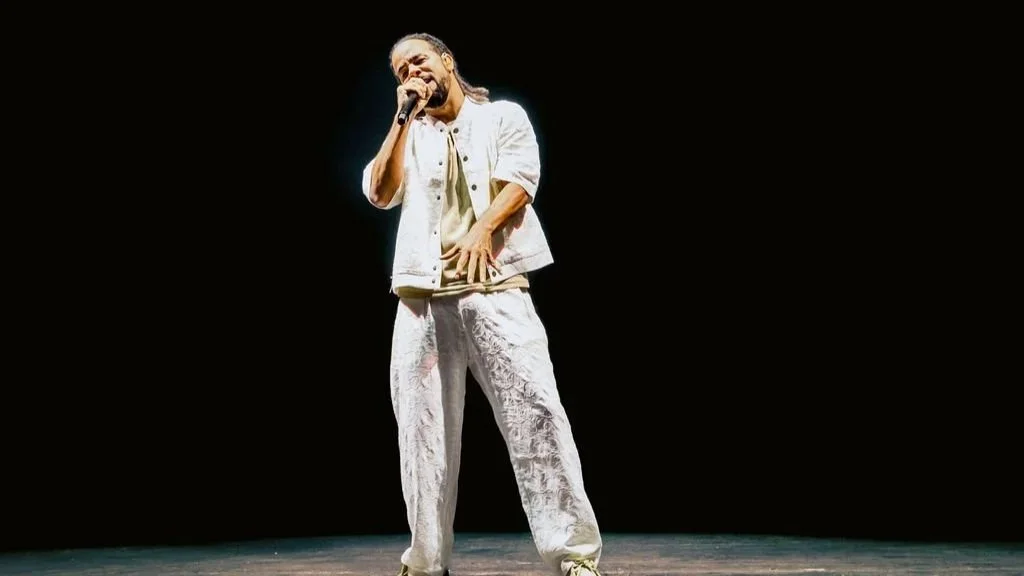
Photo: Daniel Modesté
Following their sold-out headline show at O2 Academy Brixton, frontman for Kes the Band, Kees Dieffenthaller, reflects on a major milestone in the group’s journey, from early projects like On In Five to NPR’s Tiny Desk debut.
In this conversation, the Trinbagonian-born superstar looks back on their musical roots, the legacy of Calypso and Soca, and the importance of honouring Caribbean traditions while continuing to evolve the sound.
Firstly, congratulations on selling out O2 Academy Brixton — how did it feel, and what was your favourite moment from the show?
Just walking onto the stage and seeing the venue at full capacity was a mind-blowing moment. I always go back to the first time I came to London, so seeing it completely filled felt like a real journey. It’s a ‘wow, okay, here we are’ moment.
I’d love to take it back to your On In Five album from 2009 — what did you enjoy most about creating that project, and how do you look back on that time now?
I loved that we were creating bodies of work as young people, experimenting, and trying new things. I’ve always enjoyed creating and mixing genres.
That project reflects a really innocent, creative time. There’s a purity to it — some things we were figuring out, some we were overshooting or undershooting, but those songs still carry a strong vibe when I go back to them.
2009 marked an early chapter for you, and now you’ve reached milestones like NPR’s Tiny Desk debut. What did that experience mean to you, and what’s next?
Tiny Desk is something I’ve always admired — I’m a big fan of the platform and discovering new artists through it.
It took time to happen, but we kept pushing. When it finally did, it felt surreal for our team — one of those moments where you realise things are moving in the direction you hoped for.
I wanted to talk about Calypso — do you remember when you first connected with the genre?
Calypso was always in the household. I remember Lord Kitchener playing constantly — it was just everywhere in Trinidad and Tobago.
One memory that’s stayed with me is being young, holding onto my mum’s leg while she danced to KaKa Roach. That moment has really stuck — seeing the older generation dancing, full of energy.
Later, David Rudder really opened me up to the genre, and then I went deeper into the music with greats like The Mighty Sparrow,Lord Kitchener, The Mighty Shadow — everyone brought something different.
Would you say David Rudder was your favourite Calypsonian?
I appreciate a lot of Calypsonians, as everybody has their own thing—they all bring something to the table. But David Rudder is definitely someone I really appreciate and one of the most influential over my career and how I approach music.
For me, I learned from my ancestors differently—everybody brings something innovative to the table, and David had the whole package. High Mas was a very pivotal song for me. I was in school at the time, and I used to go to mass on a Tuesday, you know what I mean?
I loved Carnival. I loved Soca. Those worlds seemed to be two different worlds, and there was a lot of back and forth going on with respect to all of it. Then David Rudder’s song High Mas came out, and it was sort of like God in the road; God in the streets.
He was that genius who could bring those two worlds together in such an intentional and poetic way. I love it. So forever and ever, I’ll be grateful for learning from him.
Years later, I even got to work with him, which was a full-circle moment for me and that experience is something I will hold on to for many years to come.
Parang is such a rich part of Trinidad and Tobago’s musical history. Do you feel traditions like Parang still shape Soca today?
Parang is really Christmas-time music, and it naturally continues through that period.
Even within the band, Robbie “Styles” Persaud is part of a parang group, so it always stays close to us.
I’m also seeing younger artists reconnecting with Calypso melodies and traditional sounds. There’s a real resurgence of that influence in modern music happening right now, which is important. Soca evolves, but those roots should stay present.
You hear it in artists like Coutain, especially with Wedding Band sampling The Mighty Sparrow’s Mr Walker, and in newer tracks like Christo’sDoux Doux Darlin— such a lovely melody rooted in those classic ideas.
It’s interesting looking at Calypso’s journey alongside global shifts like rock ‘n’ roll. Do you think Caribbean music does enough to honour its origins?
It’s important that we know where we come from. You have to know what page you’re on in the story — and that’s what the Roots, Rock, Soca Tour is all about. We have to know where we come from to know where we’re going.
I see Calypso like a tree — understanding the roots, nurturing the shoots, witnessing the fruits — it all helps the branches grow stronger.
A lot of that history is now being taught in places like Trinidad and Tobago, which I think is really positive. I’ve also been part of conversations around preserving that knowledge and I’m looking forward to seeing the continued impact.
Your music often carries themes of love and connection. How do personal experiences shape your songwriting?
That side of Soca — the groovy, emotional side — is something I really connect with.
I try to explore different dimensions within the genre, not just the party and fete space. There are deeper emotional layers in Caribbean music that deserve attention.
Are there any songs that remind you of loved ones or help you through difficult moments?
Savannah Grass is one that always takes me somewhere else emotionally. It reminds me of my father and people I’ve lost. When I perform, I often feel like my ancestors are present. It creates a sense of connection — like they’re part of the space with us.
Do you have a song from your own catalogue that carries a sense of sadness for you?
If a song makes me feel sadness, I think it’s a good song. Lion is probably the closest. It’s rooted in transformation: shedding skin, rebirth, and moving into a new chapter. That emotional shift is part of what it carries.
Lastly, when people listen to your music or come to your shows, what do you want them to feel?
You know, for me, there are a few things I want to do. First and foremost, I want you to let go and feel free. I want to show you that you belong here, too. I want you to forget about time for a moment and create space between your thoughts.
I want people to find something within themselves—what happiness feels like, what freedom feels like, what it feels like to party, and how to remember how to do that again.
And when you leave, there’s a kind of connection, like a North Star you can follow. Because a lot of people forget—we get older, we become adults, we have jobs, responsibilities, all of it.