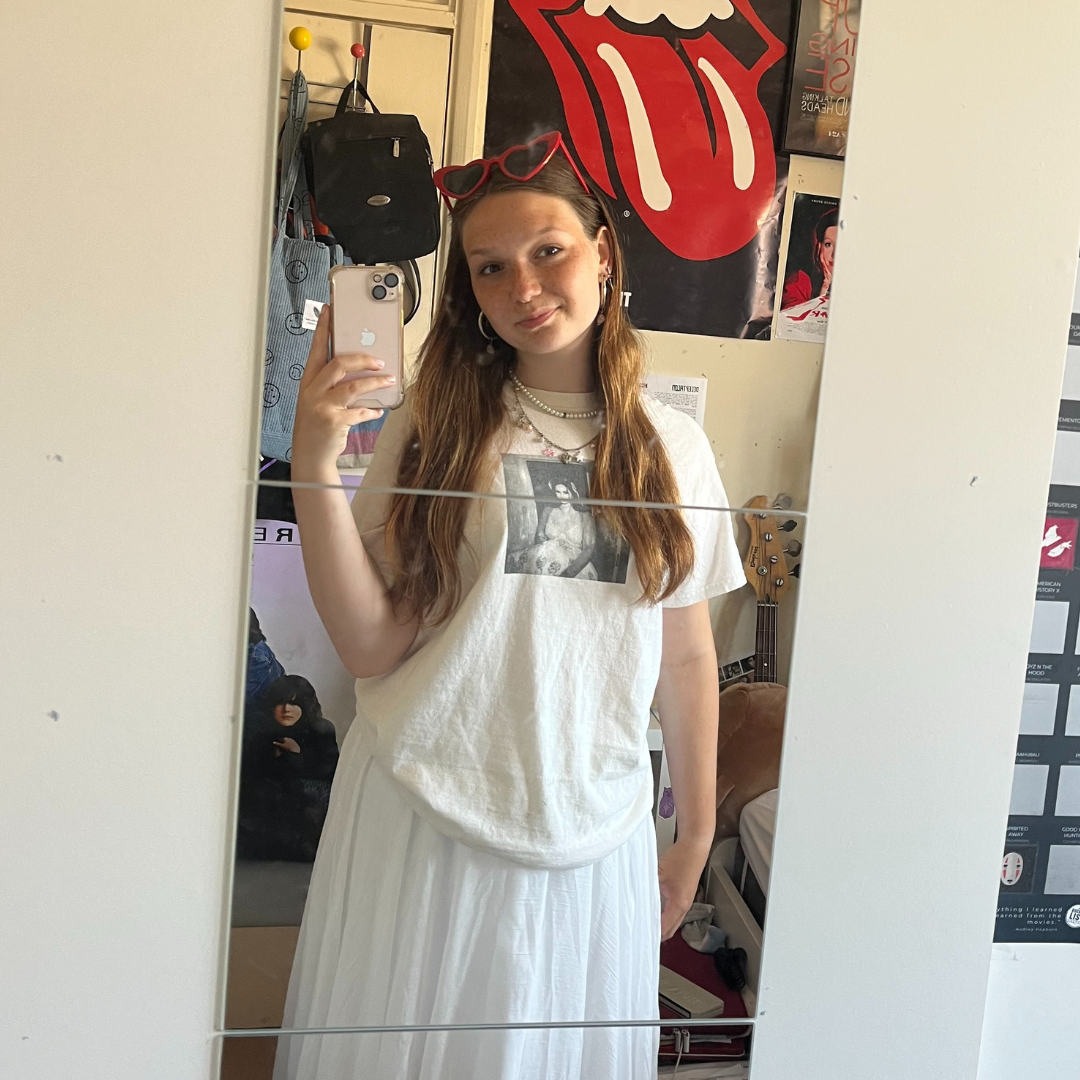
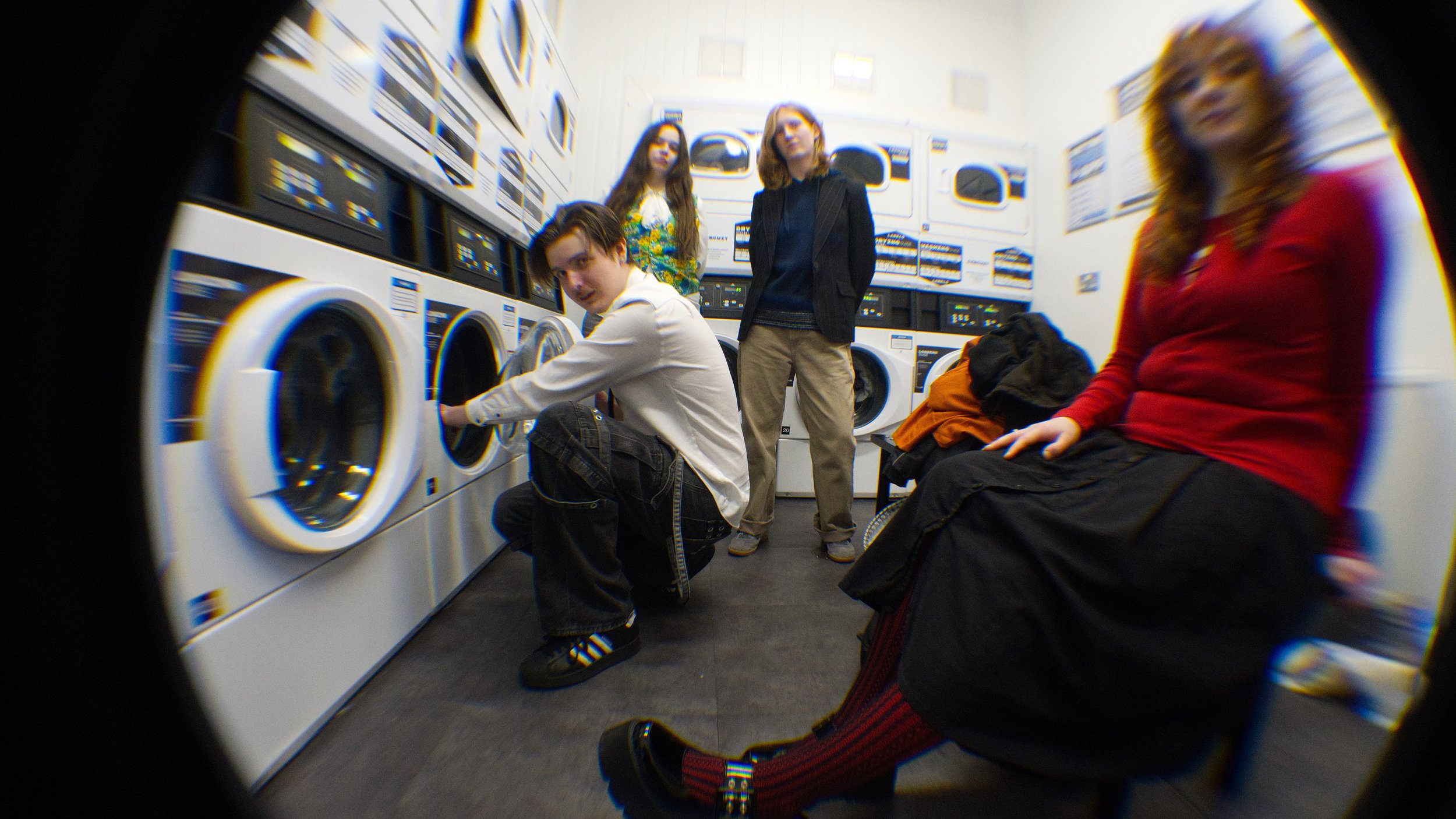
Pleasance tell us all about their new single ‘Casanova’
Ahead of the release of their latest single, we sat down with Brighton’s Soph and Ruby to discuss everything from visual art to Le Tigre.
How did Pleasance form?
Soph: We met each other in a sort of domino line-up almost. I met Izzy, who’s our drummer, and then Izzy introduced me to Ruby, our bassist, and then Ruby introduced us to Tom. So it was quite nice in the way that it was quite natural.
Ruby: It was like we were all already friends with at least one person in the band, so it was kind of built on that trust.
‘Casanova’, your latest single, comes out on the 10th of July. How did you go about creating the track?
S: We were thinking about how we could make something that had quite strong structure, with a lot of contrast. We were thinking of creating something that had almost like black and white imagery, something like flash photography. You know it's like a James Bond opening credits sequence? They have the three dots that line up and then the silhouette—we wanted something like that.
R: I think that’s to say that we work quite visually, so a lot of the time we might be imagining images or visuals, and then we write the song to match. It’s either something we’ve been inspired by in real life, like the Bond sequence, or something that we have kind of imagined in our heads. It’s definitely a fun way to write. I think sometimes when you make music you can get caught up in thinking that it has to be ‘okay here’s a chorus and here’s a verse’, so we find for us it’s almost like scoring for a film.
S: I think we approach it like that quite often—very visual.
What did ‘Casanova’ start with — a verse, a bridge, a chorus?
S: I think that one started with the chorus.
R: It started with the chords. You sort of came up with the chord loop, and then your vocals actually came from my bassline. I think that’s kind of how we write, in that we all listen to each other's parts and then we’re bouncing off each other and expanding on each other's ideas.
S: It’s like a witch’s ladder — making knots, and then space, and then knots, and then space.
When I was listening to ‘Casanova’ I felt like the vocals really stuck out to me. In the track they’re so powerful. I was wondering where the inspiration came from to use such strong vocal elements in the song?
S: They’re very theatrical. I think a voice can be just as dynamic as an instrument, and I think it would be a waste not to use it that way. I think for a while about the sound that the lyric is making, rather than the meaning of the word. The delivery really shapes the sounds of the words I’m singing, and as the sounds get harsher (along with the music), the delivery sharpens and becomes more jagged. I think we did some processing and compressing to get grittier parts to use as well.
You said when you write lyrics you’re more focused on the sound of the lyrics than the words themselves, but I’d still be intrigued to know what the kind of ideas were behind them?
S: I really enjoy misheard lyrics.
R: I’m terrible with it.
S: The song has lots of different meanings. I was thinking about the fool in a tarot journey. It’s a naive character experiencing different ups and downs. There was also the idea of puppeteering or the ways in which this character might be manipulated — it feels like there’s dark forces at play. It’s the same with the flash photography imagery. There’s things happening behind a curtain. It’s like the contrast of the seen and the unseen.
To celebrate the release of the single you’re doing a performance at Pink Moon in Brighton. What can people expect from that?
S: We’re doing some new songs as well as the single, which I think are maybe more in the vein of the single than perhaps some of our other songs have been.
R: I feel like we’ve really landed on a sound with ‘Casanova’ and it’s one that we’re really interested in developing and exploring further. That’s kind of what we’ve been writing with in mind recently.
S: And we will have T-shirts! I’ve been doing a lot of the visual artwork for the singles. I did the poster for the show, and alongside that we decided we wanted to make physical tickets.
R: Before Phoebe Bridgers decided that.
S: I think it’s an amazing thing in general that people are going back to this idea of analogue and physical media.
I noticed that you played Girls Night Out Fest (which I had the pleasure of attending), and I was wondering if you could tell us what it was like playing alongside a line-up of incredible rising women and non-binary fronted bands?
R: It was great as we got to see loads of other acts too, so we had that wonderful experience of being both the audience and the artist.
S: It was such a fun day. I think it also proves that it’s not hard to find female and non-binary fronted bands to play.
R: Every venue had great crowds, and I think promoters sometimes worry that if they put on a full show of non-male performers there won't be enough interest, and this day really just proved that there is more than enough interest!
S: It was really uplifting, and also all the female and non-binary sound engineers and promoters, and the people who work behind the scenes should be getting their flowers too — there was a great attention to detail.
You mentioned earlier that you were inspired often visually when it came to creating music. Do you have any visual artists in particular that you draw inspiration from?
S: Photography is becoming more and more accessible as essentially everyone has a camera right at their fingertips. I’m also inspired by magazines. I love cutting stuff out and moving it together into a collage. Sophie Hollington is a visual artist who made a tarot deck that I love — she works in print, and uses lots of primary block colours, along with really strong clear imagery. I think you could probably compare the sound of what we make to that.
R: Le Tigre, are almost like a sound collage.
S: Everything is almost cut and pasted which is really fun. There’s an album by Bat For Lashes called The Bride which is really atmospheric. It’s a concept album about a woman whose fiance dies on the way to their wedding. There’s a lot of moody atmosphere and premonition. It’s not a direct reference but I feel very connected to that album.
R: Kim Deal as well. I’ve grown to really love a bassline that is simple but can still be really melodic and drive a song. I think Kim Deal is the master of that, both in Pixies and the Breeders. I think ‘Casanova’ is quite a good example of that. I remember when we recorded it the producer was like ‘I just love a bassline that just does what it needs to do’. Sometimes you want to play the most complicated thing or the fastest thing but actually it’s about playing what the song needs. I feel really proud of that and hopefully landing on something that’s simple but effective.
‘Casanova’ marks the third single for Pleasance - what’s next?
S: We’d really love to keep developing this idea of an EP.
R: An EP would be amazing.
S: Each single is kind of its own microcosm of a feeling or an energy. So it would be really nice to stretch that out over an EP and see all the different ways we can explore a theme.
Finally, which underrated artists should fans of Pleasance listen to?
R: There was a band I saw recently, and I think that emo music is really having a comeback at the moment, they’re called Aeternum. They’re doing emo in a really interesting way. I wouldn’t say it’s just emo, I think there’s elements of shoegaze in there, as well as alternative rock.
S: Another band with a strong concept is Carne. They’ve got a real genuine presence on stage and songs that are incredibly written. They’re so great.
Casanova is out now.