
Sorcha Richardson: “The most important stuff you can do as a songwriter might look to someone else like you’re not working at all”
The Irish singer-songwriter discusses her latest album and the importance of slowing down in an industry that’s non-stop.
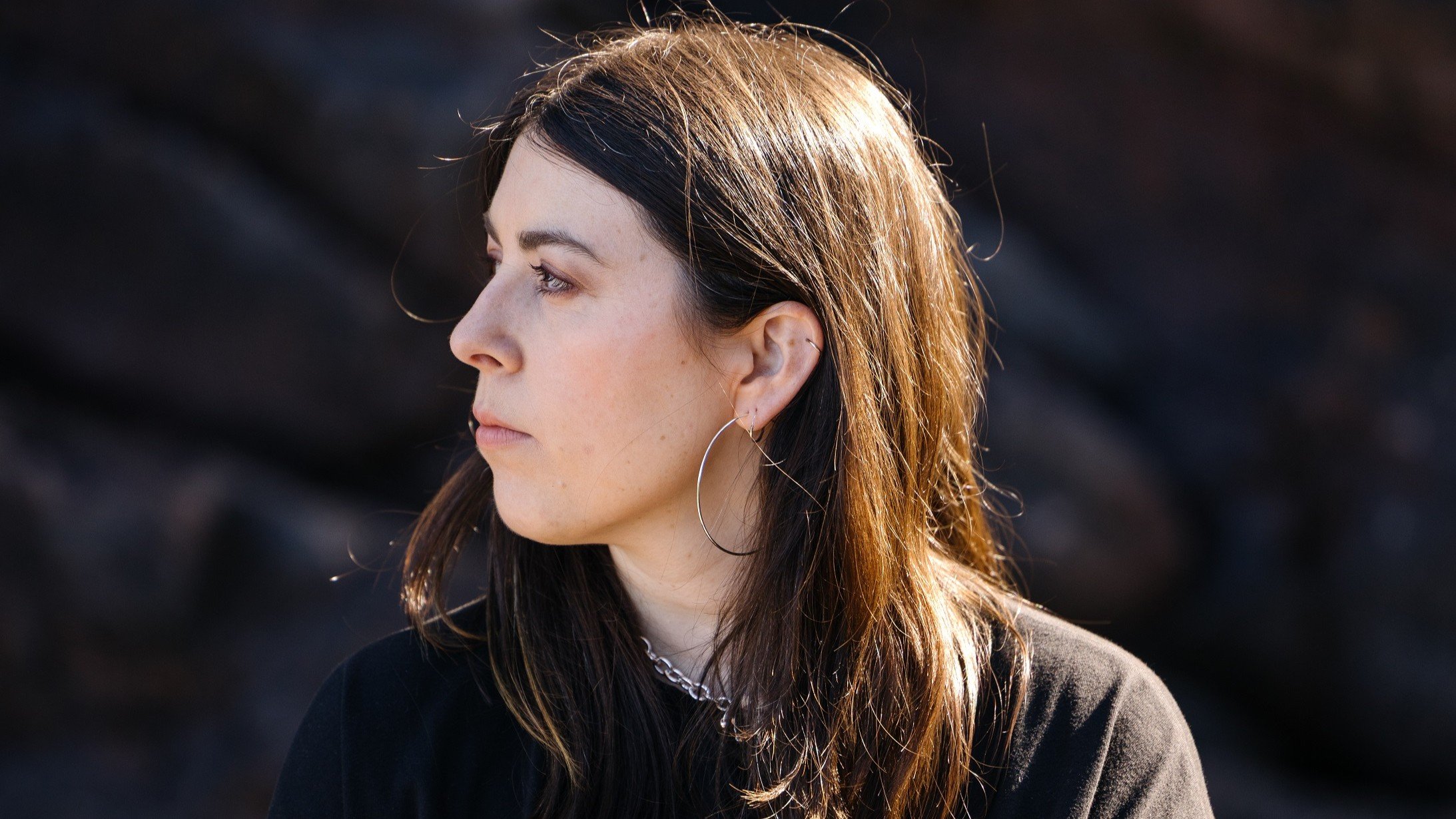
Photo: Rich Gilligan
After years of touring, travelling and living in New York, Dublin-born singer-songwriter Sorcha Richardson found herself struggling to recharge, teetering on the verge of burnout and creative paralysis. Yet still adamant to create a third album, she knew something had to change.
Moving back to Ireland, Richardson rediscovered a slower pace of life along Kerry’s beaches and winding roads and found that hitting pause can often be the key to creativity. The result is her third album, Draw The Outline — a comforting collection of songs that embrace looser structures, more organic sounds and a gentler atmosphere as Richardson explores questions of intimacy, perception, vulnerability and humiliation.
Ahead of the record’s release, Richardson chatted to us about the record, the physical landscapes that shaped it and, most importantly, not feeling guilty about actually living your life.
After nearly a decade in New York and experiencing burnout that eventually led you back to Ireland, what was it about being back there that inspired you to create again?
I travelled a lot after releasing Smiling Like An Idiot, and I don’t think I fully knew how to come home from tour and recharge. So I was either on the road, or still full of adrenaline (and exhaustion) from just coming off a tour. Even though I moved to West Kerry in 2023, I spent more time that year in America than I did at home. I knew I wanted to make a new album, and I knew I wanted to reconsider what the process of that would look like, but in order to do that I felt I needed to be in one place for longer than a week and not live out of a suitcase, which is what my life had looked like for a few years. The stillness and the landscape of West Kerry was hugely informative for this album. The amount of time I spent by myself, long drives and walks around the peninsula where I wouldn’t pass a single other person. That space allowed me to write about things that I probably had been avoiding or distracting myself from up until now.
Was there anything about returning home that initially felt uncomfortable – perhaps the lack of stimulation or constant noise – before you began to see it as something restorative?
When I first moved back home, I moved back into my parents house in Dublin. I was 18 when I moved to New York and nearly 27 when I returned so I’d never lived in Dublin as an adult, and I was a different person than when I left. It took me a while to find my way, make new friends, and just figure out how to happy here. I missed the anonymity and spontaneity of New York sometimes. But I quickly realised that the music scene and creative community in Ireland is extremely collaborative and supportive. I made a lot of new friends and discovered a version of life in Dublin I didn’t really know existed, and that was one that was very much connected to the music scene. So that was ultimately the thing that kept me here, and the thing I’ve enjoyed most about living in Ireland since then.
There’s a real sense of spaciousness on Draw The Outline. Songs like Sea Pink Moon and Ellen Forever don’t seem interested in conventional climaxes; they gradually unfold and spiral outward. Was that restraint a conscious artistic choice, or did it emerge naturally from the slower pace of life you were experiencing?
I think probably a bit of both. Touring and traveling also meant spending a lot of time in other people’s company. I really started to crave some stillness and solace amongst all of that noise. I began listening to a lot of instrumental music, and more spacious, understated albums from artists like Fionn Regan and Feist. The idea of carving out and processing space was one of the most central things I talked about with Chris [Ryan] as we made the album. The expanse of the landscape also felt like a reference. Even the opening synth and woodwinds on Sea Pink Moon make me think of the sound of howling wind on the beach in a storm.
The instrumentation is also more organic than some of your earlier work, with piano, woodwind, and acoustic guitar all having a place on the album. What led to that change in sound?
I made nearly every important decision about the album while walking on Ventry Beach in West Kerry; the track listing, the lyrics, the mixes, etc. If I could place a listener anywhere in the world to listen to the album, it would be a deserted Ventry Beach on a very cloudy, misty October morning. There was something about the imperfection of human touch and breath in woodwinds and piano that felt more fitting (and more natural) for this set of songs than warm, saturated synths that I had used before. Sometimes reaching for different instruments also allows you to write in a new way too.
The album feels like a bit of a comfort blanket to me. Even though there’s melancholy and uncertainty in it, there’s also something very warm and reassuring. Where do you think that warmth comes from?
I am glad you think that! I moved between wondering if it was too melancholy, or if it felt hopeful. I think the album asks a lot of questions, rather than makes a lot of statements. And maybe there’s some kind of acceptance about not fully having the answers that makes those questions easier to consider. The Video is perhaps the most hopeful song on the album. To me, it's both an apology and an act of forgiveness. A way of acknowledging everyone’s failings and still committing to try again. Ending the album with that song felt really important.
Your story highlights that slowing down can actually be productive. What did taking a step back teach you about ambition and the way you approach creativity?
That some of the most important stuff you can do as a songwriter might look to someone else like you’re not working at all. [Laughs] To not feel guilty about walking away, going outside, seeing your friends, watching movies.
You’ve experienced the pressure of an industry built around constant momentum. Do you think there is genuinely room for a slower approach to having a career in music, or does the economics of the industry make that too difficult?
Yeah of course! Especially if you want to have a long career. I think it’s really only worth doing if you enjoy it. There are so many ways to navigate the industry, so many different versions of what being a “successful” artist is. And I think it’s only worth doing if you’re doing the version that suits you.
You’ve already experienced chart success, millions of streams and industry recognition, but you’ve also experienced the negatives that can come with maintaining that momentum. What does success mean to you now, compared with when you first started making music?
It means making music I’m excited to share, touring with my friends and playing venues on my bucket list. But also being happy and being in a headspace where I can enjoy those things as they happen. My younger self’s dream was to be doing what I’m doing now. It’s important to remember that sometimes!
If you could go back to the beginning of your career and speak to your younger self, what would you tell her about how to approach a music career?
I would tell myself to take my time, to not worry so much about getting where I wanted to go quickly. I was in such a rush to be somebody when I was young that I felt like I was running out of time before I’d even really started. That feeling usually made me make decisions that I regret. I try to remember that now when I feel like time is slipping away.
Draw The Outline is out now via Faction Records.