
Frontman Ben Hodge tells us about stepping up the DICE sound on their sophomore record.
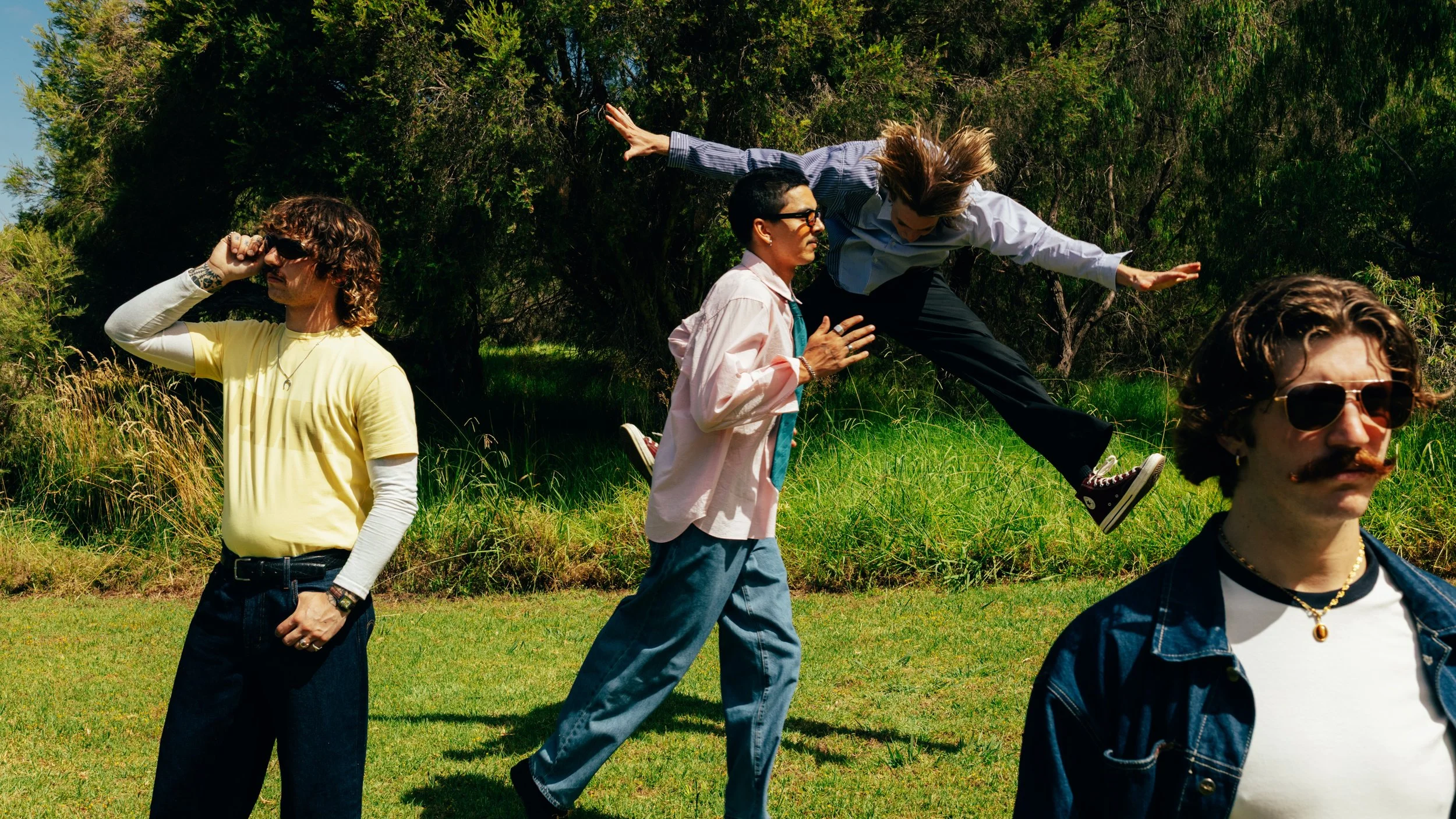
Photo: Press
Fast-rising Aussie quartet DICE know what it’s like to navigate the tumultuous highs and lows of your 20’s. But on their sophomore album, I Thought The Altitude Would Make It Worth The View, they take an optimistic look at life’s fleeting moments of freedom and possibility.
Embracing a lighter, more euphoric sound, the indie-rock band take experimental swings, introducing punchy synths and abstract layering into their familiar guitar-driven sound, while still retaining their raw garage-rock energy. The result is a collection of songs that feel both expansive and alive, brimming with movement, feeling and a sense of creative evolution.
Following its release, frontman Ben Hodge spoke to us about the creative process behind the record.
I Thought The Altitude Would Make It Worth The View feels like a brighter record that leans further into pop influences than Midnight Zoo, but it still retains your signature guitar-driven sound. How far back do the earliest ideas for this album go, and why did this feel like the right record to make right now?
The earliest ideas for this record probably came from early 2025. Both personally and professionally we were all in a better, happier place than when we did Midnight Zoo. I think that optimism and joy definitely drove the sound of this album while keeping the signature DICE elements. We’ve always loved to poke our heads into different styles and emotions and parallel to how we personally feeling, it definitely felt like the right record to make. I think sonically it was also a step up in how our sound was evolving from the more common four-piece rock music into something more experimental with the introduction of synths.
The album’s title captures a fascinating tension between hope and disappointment. What is it about I Thought The Altitude Would Make It Worth The View that made it the perfect title for the record?
The title came after the record was complete, however, [it] had a coincidental elegance in capturing the albums meaning. Originally we had the title ‘Mirror Mirror’ which leaned towards the self-reflective elements of overcoming hurdles in life.
I think the new title still captured that but refocused the album to be about the beauty in the journey and the introspective lesson that everything will be okay. It was a perfect fit.
Across the album, different songs explore different aspects of life, from stepping outside your comfort zone on Loose Change to one-sided relationships on Cooler, and addiction and devotion on Call Me For A Good Time. When you were writing the record, did you consciously set out to explore a range of experiences, or did each song simply reflect where you were in that moment?
I think there was definitely a bit of both. I knew I wanted to dive into different emotions and create a larger world for people to explore within this record, but I think it would always end up running the natural course of what we had experienced. I never liked to write about things I could sink my teeth into and feel myself so the album definitely trailed how all four of us were doing that past year. Within each song is a story of one of us but for the most part I liked to keep the lyrics still open for interpretation so people can apply their own ideals to them.
Once the songs came together as an album, did you find that there was a common thread connecting them?
I feel like my strength in song writing is that it can be relatable, particularly for those people in their 20’s. Because each song reflects on our experiences of heartbreak, anxiety, happiness etc., I could really focus on the overarching messages: how sometimes life gets you down but it’s not the end of the world, just enjoy the journey.
Tracks like Breathe and Cooler have a warm, nostalgic feel, with hints of ‘80s and ‘90s influences woven into the production. Were there any particular artists, records or sounds that inspired that sonic direction?
The four of us have such a vast and wide taste of music that we find whenever we dive into the recording process we are pulling inspiration and ideas from all genres and time periods. The ‘80s and ‘90s influence is definitely strong in the fact that we live-tracked the majority of the record so it really has this ‘lived in’ feel. Particularly on Breathe we referenced a lot of U2 with the jangly guitars, with super dialled-in delays, attempting to replicate the legendary sounds of The Edge.
The album was recorded at the legendary EastWest Studios in Los Angeles with producer Joe Chiccarelli (The Strokes, The White Stripes), while Jay Watson (POND, Tame Impala, GUM)also contributed keys and additional textures. How did working with both of them shape the final sound of the record, and did they encourage you to approach songwriting or production differently than you had before?
The whole experience working with Joe was eye opening and led us down a far more experimental road than what we’d usually take. We got in the studio before we recorded and worked on structures, dynamics and progressions which was such a critical part. This was where we were challenged to do things we wouldn’t necessarily do. So to be pushed like that was a really great influence into discovering a lot more within our music.
There were constant moments throughout the recording process where we were pushed and I think that was such a critical part in how we elevated the production.
Your music has always had a sense of warmth and escapism to it. It feels perfectly suited to long summer drives, time spent with friends, and those fleeting moments of freedom and falling in love. Do you think that’s something that comes from your Australian roots, or is it a conscious part of the world you want this project to create?
I think that lifestyle is definitely correlated to how we grew up and how our parents grew up in Australia. Small things like driving to the beach to go surf, going and running a muck with your friends on the weekend, even going on little holidays down the coast of Western Australia. Although these things resembled more our childhood than present, we were still reliving these same experiences just as adults. I definitely wanted to tap into how we all felt back in those days, so those feelings definitely shine through these songs about today’s stories.
Looking back on the finished album now, what do you think it says about who you are as a band at this moment in time?
All of us boys are really proud of the record we just made. It was definitely a new experience recording with Joe and we learnt a lot about each other and where we want the band to go.
We’ve definitely found ourselves more content with not trying to find a distinct “DICE sound” and instead dipping our toes into various styles. I think that’s definitely where we always find ourselves most excited and enjoying the music. I think this record’s another step in the life of DICE and I’m excited to see what adventure the next project takes us on.
I Thought The Altitude Would Make It Worth The View is out now.