
daydreamers’ quest for honesty, connection and belonging
Ahead of the release of their debut album, ‘Have You Tried Screaming?’, daydreamers’ frontman, Riley, reflects on vulnerability, community and the quest to create a record that feels unmistakably human.
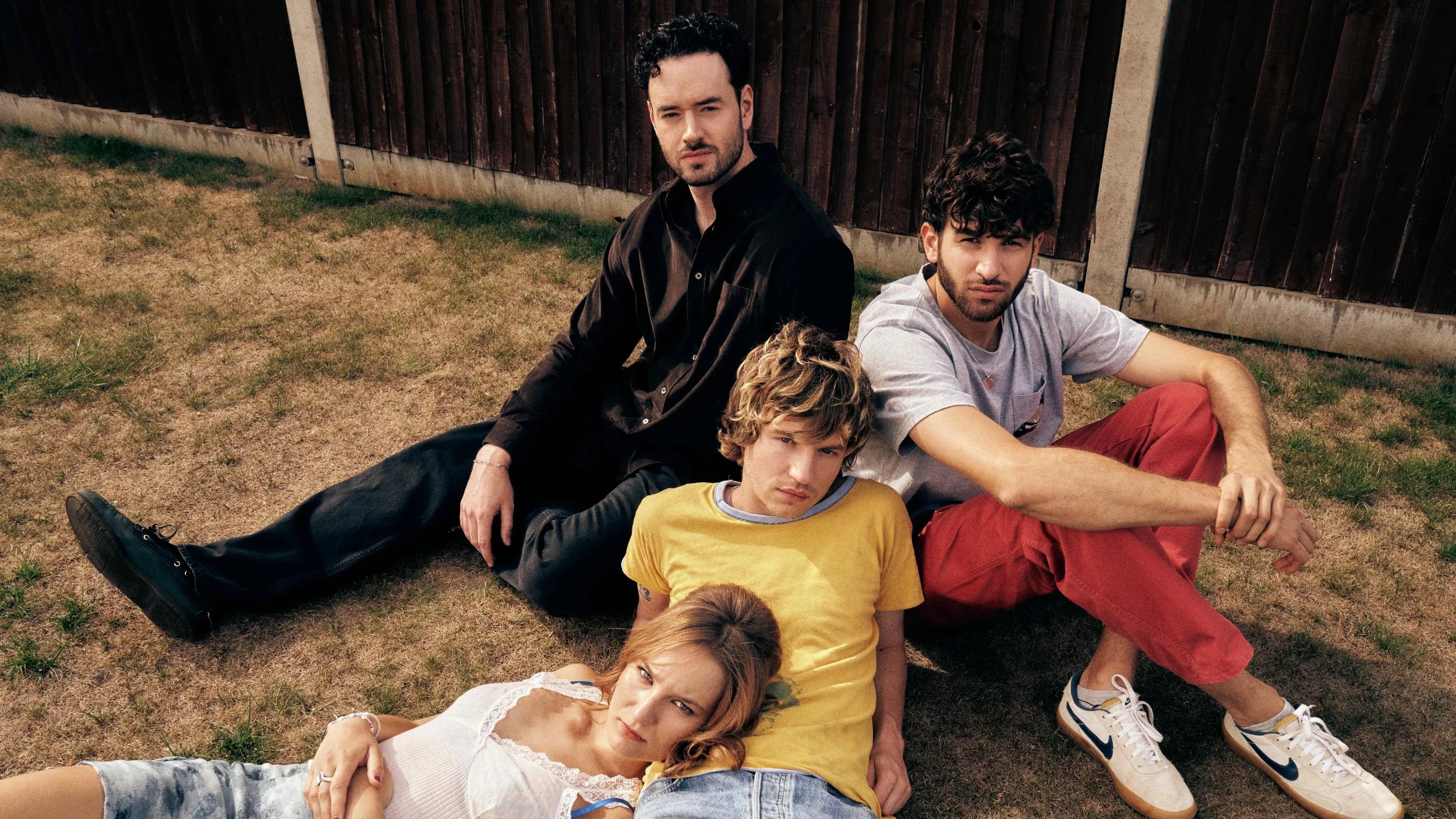
Photo: Joe Magowan
There’s no shortage of debut albums that promise to introduce a band. Few, however, feel as carefully lived-in as daydreamers’ Have You Tried Screaming? Pieced together over several years and shaped by songs written during moments of frustration, uncertainty and quiet reflection, the indie-pop quartet’s first full-length record is a deeply human exploration of heartbreak, hope and the search for belonging.
Built around what frontman Riley describes as “sad euphoria”, it finds beauty in contradiction, pairing soaring choruses and shimmering guitars with intensely personal songwriting that transforms life’s lowest moments into something unexpectedly uplifting.
Opening with its rallying-cry title track, Have You Tried Screaming? invites listeners to confront, rather than suppress, overwhelming feelings, and as the record unfolds, Riley’s vision becomes increasingly clear. It’s an emotional cycle of striving to move forward – wanting to get up, make something of yourself and chase success – only to be pulled back by self-doubt and the weight of expectation. That tension reaches its emotional peak on Start Living, whose equally bittersweet, self-questioning refrain asks: “When are you going to start living?”, before the journey finally comes to rest with Hanging Round — a beautifully understated closer that captures the quiet fear of watching everyone else move forward while you’re left wondering whether you’re keeping pace.
Yet even then, optimism lingers. Rather than offering neat resolutions, the album finds comfort in accepting that uncertainty is simply part of growing up.
Ahead of the album's release, we caught up with Riley to discuss the years-long journey behind Have You Tried Screaming?, why honesty has always been daydreamers' guiding principle, and why creating a sense of community is just as important as the music itself.
You've been building towards this album for a while now. How far back do the earliest ideas go?
A lot of the album was written two or three years ago during quite a difficult period. I was working multiple jobs, trying to do the band, and we were trying to make things happen. To me, what's most important is having a cohesive story or narrative, and I think when I started to write the songs for the album, it quickly became: “Oh, I wonder what already sits in this world that I've already got.” For instance, there's a song called Hanging Round, which I probably wrote about six years ago. So, we’ve been piecing it together with some little other ideas that I had lying around.
Why does now feel like the right moment to release the album?
From the moment we started releasing, we knew that we wanted to build towards an album. I think we probably would have done it sooner, but there was this real urge to get it right. I think there's always been this feeling that the songs mean so much, and you just want to find a way to do justice to that in the final recordings. So, it was quite an extended period of trying to get it right, and learning as we went. This was just when it was ready, and this was as soon as we were able to make it ready.
What is it about the title track ‘Have You Tried Screaming?’ that feels like the emotional core of the record?
During that period of writing, I had songs like Saviour and Sidelines, that really felt like this kind of angst, this frustration of being where I was and wanting to get out of it. And then I had the title of the album, Have You Tried Screaming? I wanted a song with that title, so as soon as I had this batch of five or six songs, I was like: “I’m gonna call it, Have You Tried Screaming? I want that to be the way in, the title track.”
A little thing that makes me really happy is that the first song starts with the same sound as the album finishes, so it feels like a cohesive journey. I wanted the intro to feel like what the album felt like to me, and then wrote the song based on that.
A lot of the songs on the album have this contrast between sound and subject matter. Even when the lyrics are dealing with uncertainty or heartbreak, there’s still a sense of energy or release. What is it that draws you to that approach?
I think it just comes out, so it's difficult to analyse it. What I do is pretty insular – headphones on, laptop, guitar, bedroom production – and then there's the way we want it to feel live.
We've always loved these big, performative shows that make it feel like everybody's involved. I remember seeing Bleachers not too long ago and the energy that the crowd has at those shows … they know the moments to shout. They know the moments to sing along. They know the moments where it's going to be small, and I think there's something so amazing about that.
I can only write as a diary entry to get things off my chest, so there's a juxtaposition between me doing that, and then us playing it live, and it being everybody’s. daydreamers is everybody at a show, and that maybe sounds cheesy, but that's always the way that we've imagined it. It’s the community. We want to meet everybody afterwards, and hang out with them, so those two things have always gone together.
Is it always like a diary when you’re writing, or do you ever lean into fictionalised versions of the things you've experienced as well?
I've always focused on what's happening in my life, what I'm feeling, but I'm super excited to step out and explore what it feels like to write a fictionalised version of something. You never want to limit yourself. I find that the only thing that keeps me being creative is doing things that I haven't done before.
When you're being so emotionally direct and honest, do you find it difficult accessing those emotions or is it more difficult sharing them with others?
I think the most frustrating part is when you're sitting down to write something and willing yourself to be honest, but you can't tap into it. Or because you're working with lyrics, and then you're also working with arrangement, it's these two different sides of your brain.
Whenever I stop and think, “Am I saying what I want to say?” it can quickly tap into that negative side of “Well, what am I doing anyway? What's the point?” But it's also quite useful because it forces me to ask what the song is really about.
Usually, the thing that excites you is the thing that's also vulnerable and is what you want to say. My friend calls it a quest. Music and writing is a constant quest, because whatever happens, you're just going to try again tomorrow. You just can't give up. You've got to find a way to be honest.
As the album progresses, the songs feel a bit more reflective and restrained in places. ‘Hanging Round’, for example, is subtler and also quite different to what you usually do. Did you consciously want the record to become more intimate as it went forward?
For me, daydreamers is open guitar chords. It's electric guitar, it's acoustic drums, and it's weird samples. Then I think for this album, it was kind of like: “Let's take all of that but make it feel more like a live band”
Then there were these other ideas that maybe wouldn't be a single. There's this real want within music for things to always be super successful or super streamable, but something that's so important is that there are different songs for different occasions. That gateway into somebody like us might be Call Me Up, because it's so instant and it's so abrupt, but then a song like Hanging Round is probably the one that you want when you're alone, struggling to sleep.
Doing an album gives you a real chance to say this is for me as a writer. This is who I am. When we were first releasing it felt like everything had to be the best thing in the world, and I think I've definitely lost that a lot. Knowing that there's people that believe in the music, that there's an audience who love it and who get it as much as I get it and love it, I trust that people will believe in our new stuff too.
There are some really interesting textures on the record as well. ‘Pieces of England’ stood out to me with its blend of warm, nostalgic guitar tones and more modern production. Can you tell me a bit more about that track?
Pieces of England was an interesting one because I think that was probably written before daydreamers was a thing. Really this is a little song for me. The start of the song is just me in my little bedroom where I used to live in Chesham, tuning the guitar, and it's my mum's old classical guitar.
You always get to a point, especially when you're working with different people, where you look around like: “Is nobody gonna tell me to re-record that? Is that really good enough?” But I think it's the imperfections that matter.
I'm sure everybody goes on about it, but with [the rise of] AI, I want a human being, and I want you to throw it in my face that this is a human being, because I want to believe it. And I feel like Pieces of England is a good example of that.
Did making the album change the way you think about daydreamers sound moving forward?
With whatever happens next, and with whatever the next sound is, I think I can only be inspired by what I want to make, instead of thinking, “What should daydreamers sound like?” Because I think at the start, you feel like it's useful to put your music into a language to describe it, like indie pop, dreamy, nostalgic. I think now the challenge is losing all of that but still maintaining a little bit of a thread. I believe the thread will be there because it's the same process each time. I'm going to be the same writer in three years’ time, to a degree.
I've always been inspired so much by Radiohead in that regard. Them doing OK Computer and then going to Kid A, which is just such a gear shift, but trusting that their fans will stay with them. That's always felt really special to me because for me as a fan, I loved that. I was like: “Whoa, you can do that as a band. That's so cool.” But that's not necessarily saying that we're going to do an experimental electronic album next.
You've often said daydreamers is about more than music—it's about creating a space where people feel understood. What do you hope listeners take away from the album?
Making, writing and listening to music has always been my safe space, and it's always felt like when anything is going wrong, or I'm not feeling great, I can turn to music, and that has always got me out. If this body of work can be that for somebody else, for one person, who's maybe alone in a bedroom, that gives me goosebumps. That’s the point of it.
I think it's our job to provide that space for people to find each other, whether it's coming to a show or it's on our discord.
I've felt probably quite misunderstood for a lot of my life and struggled to fit in. So that feels like a really good life purpose for me. How can I help people fit in? How can I help people feel understood?
Is there a specific song that you're particularly excited for people to hear?
Having the whole album to say, “Listen to this, and then when you come back, you're gonna know me better” is what excites me most.
Have You Tried Screaming? is out now via Robots + Humans/Epic Records.